 Florence City Guide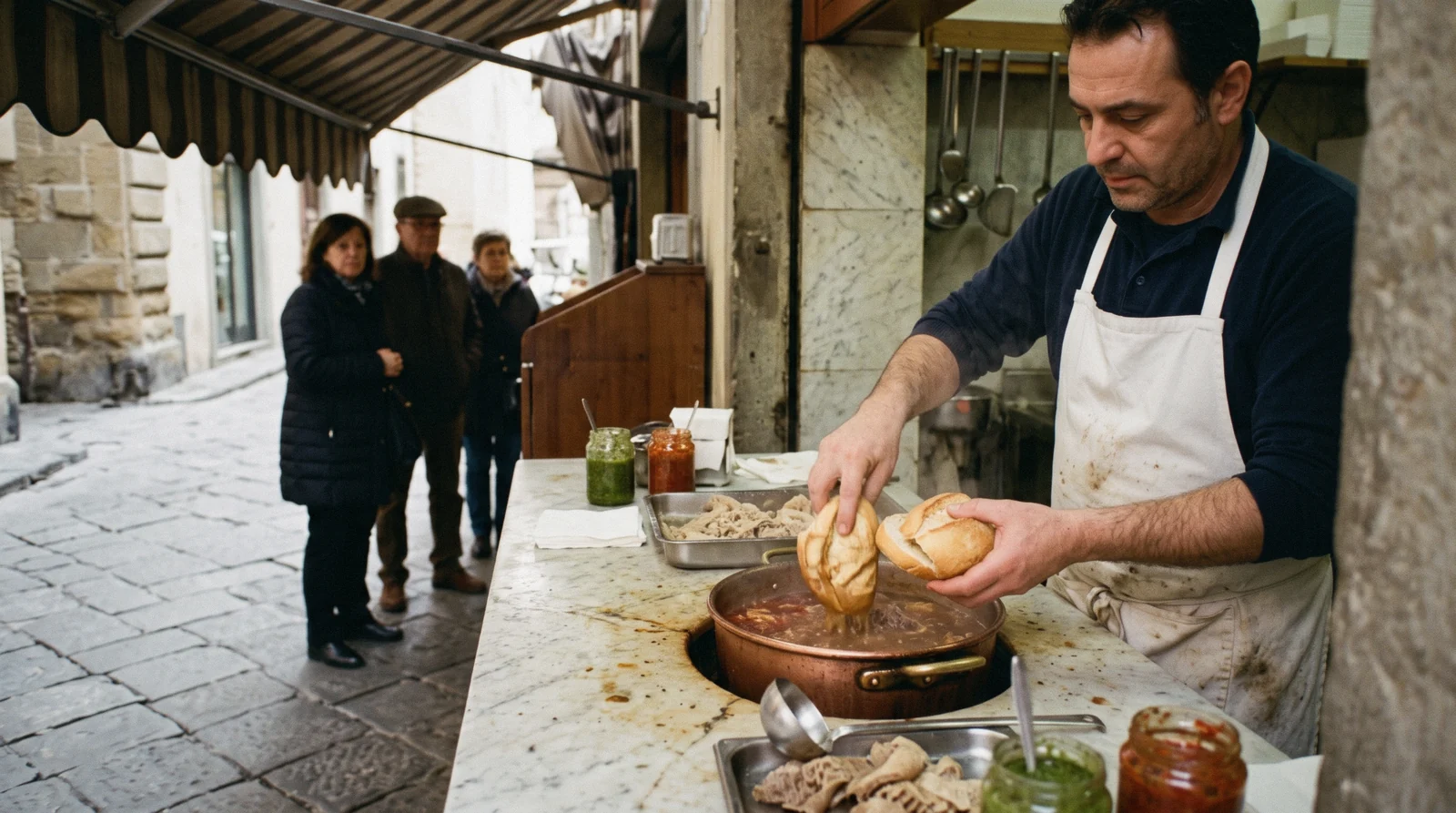
Where to Eat in Florence
Most answers to where to eat in Florence are a list of restaurant names with nothing behind them. This page names twelve places, but only ones a published guide names first, and it puts the guide entry and the year beside each. Like the rest of what to see in Florence, it starts from what can be sourced: lists go stale in a season, and the ones that survive get so busy they stop being the thing that was recommended. What lasts is knowing what the food is, how it is priced and what the bill will add — because in Florence the two most common bad meals are the same two mistakes: ordering a steak without understanding that it is sold by weight, and sitting down at a table without reading the line on the menu that says coperto. Everything below is either the official definition of a dish, taken from the Regione Toscana product register or the consortium that certifies the meat, or an honest description of how a Florentine counter works. Where we could not source a figure — the amount of a cover charge, the price of a plate — we say so and print nothing. Cooking classes, market walks and evening wine tours all live on every food tour and cooking class compared; this page is what you do the rest of the time.
Quick answer What the food is, what the bill adds, when the kitchen is open
Eat the four things this city actually cooks: bistecca alla fiorentina (a loin steak, priced by weight, one steak feeds two), lampredotto or trippa from a street cart at lunch, a schiacciata panino on the move, and ribollita once the weather turns. The bill will carry a coperto per person, and coffee costs more at a table than at the bar. Between 15:00 and 19:30 most kitchens close, and the food hall at Mercato Centrale is the thing that stays open.
Key takeaways
- Steak is sold by weight, not by portion — the consortium's own reference cut is a 1.2 kg loin, which is a plate for two, so read the weight rule before you order one each.
- Lunch under €10 exists and is not a compromise: the tripe stands sell the same dish the Regione Toscana register describes, and the food hall inside the market building itself runs from 9:00 to 23:00.
- The bill has two lines nobody warns you about — coperto and table service — and the tipping norm is rounding, not a percentage.
- Want names? Twelve places a published guide names first — Michelin, Slow Food, Gambero Rosso and the wine-window census — each with the entry it comes from and a map link.
- Want the market with somebody who knows the stalls? A guided market morning is €42 and rated 4.8 from 1,856 reviews; the full comparison sits on every food tour and cooking class compared.
The Nine Things Florentines Actually Eat
Every dish below is either registered by Regione Toscana as a traditional product, protected by an IGP or DOP consortium, or described on the market's own site. The sources sit in the last column. It is the honest core of a Florentine menu: what the words mean, and where you buy each one without a reservation.
Read it as a shopping list rather than a wish list. Four of these are counter food you can eat standing up in ten minutes; three are the reason to book a table; two are seasonal and disappear in July.
| Dish | What it actually is | Where you buy it | Source |
|---|---|---|---|
| Bistecca alla fiorentina | A thick loin steak on the bone, grilled and served rare; the certifying consortium's own reference cut weighs 1.2 kg and stands 5 cm high | Sit-down trattorie and steak houses; the food hall counter inside the market | Consorzio Vitellone Bianco dell'Appennino Centrale IGP |
| Lampredotto | The fourth stomach of the cow — the abomasum — boiled two to three hours and served in a roll dipped in its own broth | Street carts, mostly working the lunch hour | Regione Toscana traditional-products register |
| Trippa alla fiorentina | The first two stomachs, the rumen and reticulum, cut into strips and traditionally cooked with tomato | The same carts, and as a starter in old trattorie | Regione Toscana traditional-products register |
| Schiacciata | Flat, salted, olive-oiled bread, split and filled to order | Bakeries and panino counters all day | Regional bread tradition; see the Pane Toscano note below |
| Pane toscano | Bread made from Tuscan soft wheat, type 0 flour, natural sourdough and water — the consortium's ingredient list names no salt at all | Every bakery; it is what arrives in the bread basket | Consorzio Pane Toscano DOP |
| Ribollita | Bread soup, literally reboiled: cavolo nero, cannellini beans and yesterday's bread, finished with raw olive oil | Trattorie, autumn and winter | Vetrina Toscana, Regione Toscana |
| Pappa al pomodoro | The summer sibling of ribollita — the same stale bread, tomato instead of cabbage | Trattorie, served warm or at room temperature | Regional bread-soup tradition |
| Crostini di fegatini | Chicken-liver paste on small toasts, the standard Tuscan opening course | Almost every trattoria antipasto | Tuscan trattoria convention |
| Cantucci e vin santo | Twice-baked almond biscuits with sweet wine, the way a Tuscan meal ends | Trattorie and bakeries | Tuscan trattoria convention |
One warning about that last column. "Traditional product" is a register, not a quality mark: Regione Toscana's own database says the list carries none of the guarantees a DOP or IGP does, and that products on it are not checked against their description beyond ordinary food-safety law. It tells you what a dish is, not that the plate in front of you is good.
And the bread basket is not free here — it arrives with the coperto, below. One more thing that column will not tell you: four of the dishes on it are bread dishes with a vegetable name, so if anyone at your table eats gluten free, vegan or dairy free, read what is actually in each Florentine dish before you order. Since a long dinner in a trattoria usually ends with a walk home, it helps to know where to stay in Florence before you book, because the best hotels in Florence first time around are the ones closest to the streets you will be eating on.
Bistecca Alla Fiorentina: The Steak Is Sold By Weight
This is the most expensive misunderstanding on a Florence menu. A bistecca is not a portion: it is a cut of loin priced per kilo or per etto — an etto is 100 grams — and the bill is the weight of the piece multiplied by the menu rate. A price quoted "all'etto" is a tenth of the kilo rate, which is why the figure looks reassuring and the bill does not.
The cut itself is defined. The Consorzio di Tutela del Vitellone Bianco dell'Appennino Centrale IGP — the body that certifies the beef most Florentine kitchens buy for this dish — publishes the reference: the steak comes from the loin, its own recipe works with a 1.2 kg piece, and it calls 5 cm the right height to grill a rare steak properly. The IGP mark is stamped on the certified cuts, so a kitchen serving the real thing usually says so on the menu.
The arithmetic: 1.2 kg of bone-in loin feeds two adults with a vegetable, often three with starters. One steak each ends with meat left on the board and a bill nobody enjoyed. Ask what the piece weighs before it is cooked — a normal question here — and if it is over a kilo, split it. Ask for it rare, too: the consortium's own method sears both sides, takes the steak off while the centre is still red and rests it before carving.
No official page lists what Florentine restaurants charge per kilo, so the only figures here are ones a venue prints itself — L'Ortone's menu says €58–€67 per kilo. The shape of the decision does not change: one steak, two people, weighed before it goes on the grill.
Not ideal for
- If you are eating alone, or you do not eat rare meat, the bistecca is not the meal to chase. Order the same beef as a tagliata, or spend the money on the antipasto-and-primo half of the menu.
The Tripe Carts, And Why They Are Not A Dare
The most Florentine lunch in the city costs less than a museum ticket and is eaten standing up. Lampredotto and trippa are both registered by Regione Toscana as traditional products of the province of Florence, and the register is specific about what you are eating. Trippa is the rumen and the reticulum — the first two chambers of the cow's stomach — pale, smooth and mild. Lampredotto is the abomasum, the fourth chamber, darker, softer, with the violet crests that give it its look. Both are washed, soaked overnight and boiled for two to three hours before they reach a counter; the register puts production at roughly 2,500 quintals of trippa and 800 of lampredotto a year — an industry, not a curiosity.
At the cart, lampredotto comes in a semelle — a plain round roll — its top dunked in the cooking broth, then dressed with salsa verde, a green parsley-and-garlic sauce, or a red chilli sauce, or both. Trippa comes in a bowl or tub, cut in strips with tomato, the way the register describes it. Neither tastes of offal the way people brace for; both taste of broth.
The practical parts. The carts work the middle of the day and many pack up by mid-afternoon, so this is lunch, not dinner. You queue, order at the counter and eat at the standing shelf or on a step — no coperto, no table service, no bill to read. Ask for it "bagnato" if you want the roll dipped and "con tutte e due le salse" if you want both sauces. Three stands are named further down, because a published guide names them first: the counter under the Mercato Nuovo loggia, the market stall at San Lorenzo and the Gavinana kiosk Slow Food gave a Chiocciola. Beyond those, the rule is the old one — the busy ones with Florentines in the queue, in San Lorenzo, at Sant'Ambrogio and around the market streets.
Not ideal for
- Nothing at a tripe cart is vegetarian, and there is no gluten-free version of the roll. If that is your table, the food hall in the market building has counters that are, and a guided market morning will steer you.
Schiacciata, Pane Sciocco And The Panino Problem
Schiacciata is the flatbread — pressed thin, salted on top, glossy with olive oil, baked in trays and sold by the slice or split into a sandwich. It is why the sandwich queues here are what they are: a panino is a proper piece of bread with two or three good things inside it, not a snack.
The loaf on your table is a different animal, and it explains half of Tuscan cooking. Pane Toscano DOP is made, per its consortium, from Tuscan soft wheat, type 0 flour that keeps the wheat germ, natural sourdough and water. Salt is not in that ingredient list. Visitors read the unsalted crumb as a mistake; it is a design. The bread is a vehicle — for salty prosciutto and pecorino, for oil, for the soups below — and it keeps well enough that four-day-old loaves become dinner rather than waste.
The famous sandwich queues are a social media artefact, not a verdict: the same fillings on the same schiacciata come out of ordinary bakeries three streets away, Forno Pugi among them.
One name trips people up: schiacciata alla fiorentina, on a pastry counter in February, is not this bread. It is the flat Carnival sponge, heavy with icing sugar and often stencilled with the Florentine lily. Same word, different aisle.
Not ideal for
- A panino eaten walking through Piazza del Duomo is legal but joyless. Take it to the river wall or the Rampe below Piazzale Michelangelo — five minutes' walk buys a considerably better lunch.
Ribollita, And The Half Of The Menu That Depends On The Month
Ribollita is the dish that explains the bread. Vetrina Toscana, the Regione Toscana food programme, records it as a poor-kitchen dish: vegetables from the garden, cannellini beans, cavolo nero — the dark, blistered Tuscan kale — and stale bread, cooked in quantity and reheated over the following days, which is exactly where the name comes from. Reboiled. The regional recipe layers garlic-rubbed toasted bread into an earthenware bowl, ladles the soup over it and finishes it with raw olive oil at the table.
Eat it between roughly October and April. Cavolo nero is a cold-weather crop improved by frost, and a July ribollita is a concession to tourists. In the warm months the same stale bread turns up as pappa al pomodoro, or as panzanella — soaked, tossed with tomato, onion and basil, served cool.
The rule for reading any trattoria menu here: the primo section is where the local cooking lives — soups, hand-cut pappardelle with ragù, tortelli filled with Mugello potato. If you are not having the steak, two starters and a primo beat a dutiful three courses.
A Glass Through the Wall
Set into the stone of the old palaces at waist height are small arched hatches with wooden shutters, the buchette del vino. Families who owned Tuscan estates once sold their own wine through them, a flask at a time. A few bars pour through them again, Babae on Via Santo Spirito among them.
The census, the map of the ones that still serve and how to order are on the wine windows of Florence.
Mercato Centrale, Read As Food
The market building itself has its own page covering the ground-floor stalls and the leather market outside, so this section is only about eating in it.
The first floor is a food hall: counters, not restaurants, each doing one thing, around shared tables. It is open every day from 9:00 to 23:00, per the market's own information page, and that single fact makes it the most useful address in this guide. Florence closes between meals; at 16:00, and again at 22:30, the food hall is still serving. Its own site names a counter dedicated to the bistecca and a pizzeria among the traders.
How to use it: walk the whole floor first, because the counters price and portion very differently; order and pay at each counter; carry the tray to a shared table. There is no coperto and no table service, so nothing is added at the end. It is not the most atmospheric meal in the city — it is the one available when nothing else is.
Not ideal for
- Between 12:30 and 14:00 the floor is full, loud and slow at every counter. Come at 11:45 or after 21:00 and it is a different room.
Reading The Bill: Coperto, Servizio And The Standing Coffee
Three charges surprise visitors, and none of them is a scam. Below is what each one is, what Italian practice does about it, and where we could not find an official figure — because we would rather say so than publish a number somebody else guessed.
The rule that protects you is the simple one: everything a restaurant will charge has to be legible before you order it, on the menu or on the price list displayed outside. If a charge is not written down, ask about it before you sit.
| Line on the bill | What it is | What you do about it | What we could source |
|---|---|---|---|
| Coperto | A fixed charge per person for the table setting, bread and linen, added once per diner | Nothing — it is legitimate and standard in Tuscany. Read it on the menu before you sit down | Amount: not stated on any official page we read. It is a per-head charge, not a percentage |
| Servizio | A service percentage, added by some tourist-facing places on top of the coperto | Check whether the menu declares it. A place that charges both is telling you who its customers are | Amount: not stated officially. Where it appears, the menu must say so |
| Pane | Bread, sometimes billed separately instead of inside the coperto | You may decline the basket if you do not want it billed | Not stated |
| Tavolo / table service in a bar | Coffee and drinks at a seated table are priced from a different, higher tariff than the counter | Drink your espresso standing at the bar like everyone else and pay the counter price | The two-tariff practice is universal; the amounts are set by each bar and are not published centrally |
| Tip | No obligatory service percentage is added by law in Italy | Round up, or leave small change for a good meal. Nobody expects a fifteen or twenty per cent tip | No official rule exists; rounding is the norm we observe and the one locals use |
Two consequences. In a piazza with a view you are paying a location premium through the table tariff, which is a fair trade only if the view is the point of the meal. And the coperto makes the cheap end of a menu behave oddly: one plate of pasta carries the same per-head charge as a full dinner, so a solo lunch is the worst value a sit-down table offers.
That is the hour to eat at a counter.
When The Kitchen Is Actually Open
These windows are convention, not an official schedule — no Florentine authority publishes restaurant hours, and every place sets its own. They are what the city runs on, and knowing them stops the classic mistake of arriving hungry at four in the afternoon and eating badly out of desperation.
The only hours in this table that come from an official page are the market's: Mercato Centrale's first floor states 9:00 to 23:00, every day. Everything else is the pattern, written plainly.
| Hour | What is open | What to order |
|---|---|---|
| 07:00 – 10:00 | Bars, standing at the counter | Cappuccino and a pastry, taken at the bar. Ordering a cappuccino after lunch is not illegal, it is just a signal |
| 12:00 – 12:30 | Tripe carts start; bakeries and panino counters busy | Lampredotto, or a schiacciata panino before the queue builds |
| 12:30 – 14:30 | Trattoria lunch service, the full menu | Primi. This is the cheapest hour to eat a proper Tuscan plate |
| 15:00 – 19:00 | Most kitchens shut. Bars, gelaterie and the market food hall carry on | Coffee standing up, gelato, or a full plate on the market's first floor |
| 19:30 – 20:00 | Dinner service opens; the early tables are the tourist tables | If you want the steak, this is when to be seated with a booking |
| 20:30 – 22:00 | The hour Florentines eat | Anything. Kitchens generally stop taking orders around 22:00 to 22:30 |
| After 22:30 | Market food hall to 23:00, then bars | One last thing on the first floor, then a glass somewhere |
Two more conventions. Many family trattorie close one full day a week, usually Sunday or Monday, and much of the city takes two weeks off in August — check before you walk across town. And a dinner booking is normal even in modest places; the walk-in table at 20:45 on a Saturday is why people end up eating badly.
Twelve Places We Can Name, And Who Says So
Every place below appears in a published guide we can point you at — the MICHELIN Guide, Slow Food's Osterie d'Italia, Gambero Rosso, or the Associazione Buchette del Vino's census of wine windows — and every address opens in Google Maps so you can see the walk before you commit to it. Hours and closing days come from each venue's own site; where a venue publishes none, we say so rather than guess. Prices appear only where the venue prints them itself.
-
Il Trippaio del Porcellino
The tripe cart you will actually walk past: Gambero Rosso's Florence lampredotto round-up puts this stand under the Mercato Nuovo loggia in the centro storico, trading since the end of the nineteenth century, with trippa and lampredotto made by Orazio Nencioni and a glass of loose red alongside. It publishes no hours of its own — the carts work the middle of the day and pack up when the pot is empty.
- Address
- Piazza del Mercato Nuovo
-
Il Trippaio di Gavinana (Leonardo Torrini)
In October 2025 Slow Food gave a tripe kiosk its Chiocciola — the guide's highest mark — for the first time in the history of Osterie d'Italia, and this is the stand: Leonardo Torrini and Silvia Sbrana's kiosk on via di Ripoli, out past the Oltrarno in Gavinana. Gambero Rosso calls its lampredotto panino the best in circulation. It is a bus ride rather than a stroll, so go for the dish the Regione Toscana register describes, not for convenience. No hours are published.
- Address
- Via di Ripoli 169
-
Lupen e Margo
Beatrice Torrini's counter, stall 75 among the stands of the San Lorenzo market beside Mercato Centrale, listed by Gambero Rosso for lampredotto, trippa alla fiorentina and bollito misto served in a roll or a tub. The hand-written signs on the counter are half the point — one of them asks you not to request the panino cut in half. The stall publishes no hours; the food hall upstairs runs 9:00 to 23:00, the stalls below it do not.
- Address
- Via dell'Ariento, banco 75
-
Forno Pugi
A bakery, not a restaurant, and the first name in Gambero Rosso's schiacciata round-up: schiaccia in several versions — taller, flatter, wholemeal, walnut — cut and weighed over the counter, filled if you ask. The Piazza San Marco shop is the useful one, across the square from the Accademia queue in the San Marco district. Its own website is a placeholder at the moment, so we publish no hours for it.
- Address
- Piazza San Marco 9b
-
L'Ortone
€58–€67 / kgA 2026 Michelin Bib Gourmand — the guide's mark for good cooking at a moderate price — on the corner of the Sant'Ambrogio market in the Santa Croce district; Michelin describes a bistro with a Tuscan soul, pared back in decor. It is also the clearest illustration of the weight rule we found: its own menu prints the bistecca alla fiorentina at €58 to €67 the kilo depending on the cut, by weight and never by the plate.
- Address
- Piazza L. Ghiberti 87/R
- Hours
- 12:15–14:30 and 19:15–22:30, daily
-
Il Latini
Michelin's 2026 Bib Gourmand entry calls it a Florentine institution faithful to itself over time: shared tables, hams overhead, Tuscan classics done straight. Two practical things from its own site — the kitchen serves dinner Tuesday to Sunday but lunch only at the weekend, so a Monday plan fails outright — and one from the wine-window census, which records a real buchetta on the wall here. See the wine windows.
- Address
- Via dei Palchetti 6/R
- Hours
- Dinner Tue–Sun 19:30–22:30; lunch Sat–Sun 12:30–14:30
- Closed
- Monday
-
Trattoria Cibrèo – Il Cibrèino
The plain room next door to the far more expensive Cibrèo restaurant on via dei Macci, a block from the Sant'Ambrogio market in the Santa Croce district. Michelin's 2026 Bib Gourmand entry is blunt about the distinction — a simple, typical trattoria, not to be confused with the elegant Cibrèo beside it — and the kitchen is the same tradition at a fraction of the bill. The group's website publishes no hours for the trattoria, so telephone before you walk over.
- Address
- Via dei Macci 122/R
-
Zeb
A marble counter with stools rather than a dining room, in San Niccolò at the foot of the climb to Piazzale Michelangelo — Michelin's 2026 Bib Gourmand calls it a decidedly unusual restaurant for the Oltrarno. Its own site sets the terms plainly, including the one that catches people out: bookings are taken for dinner only, so lunch is first come, first served.
- Address
- Via San Miniato 2/R
- Hours
- 12:30–15:30 and 19:30–22:30; dinner bookings only
- Closed
- Wednesday, and Sunday evening
-
Osteria dell'Enoteca
One of only three Florence addresses awarded a Chiocciola — Slow Food's highest mark, for cooking, welcome and value together — in Osterie d'Italia 2026, on via Romana behind the Pitti Palace in the Oltrarno. Its own site is unusually straight about when it is shut, which matters here more than the menu does.
- Address
- Via Romana 70/R
- Hours
- Dinner 18:30–22:00; lunch Fri–Sun from September
- Closed
- Tuesday; no lunch in July and August
-
Babae
The Associazione Buchette del Vino keeps the only systematic census of Florence's wine windows — no public archive holds one — and its census marks Babae, on via Santo Spirito in the Oltrarno, among the venues that actually pass wine through the hole in the wall rather than merely owning one. The window keeps its own short serving slot, which is not published anywhere official; the wine windows section explains what that means in practice.
- Address
- Via Santo Spirito 21/R
- Hours
- Mon–Fri 11:30–00:00, per its own Linktree
- Closed
- Saturday and Sunday
-
Gelateria della Passera
A three-metre counter on a small square in the Oltrarno, with a live entry in Gambero Rosso's Gelaterie d'Italia guide, last assessed in 2026, and the guide's 2024 award for building the range out of local produce. There is nowhere to sit, and no hours are published on any site of its own — the queue on the square is the opening sign.
- Address
- Via Toscanella 15/R
-
Gilli
Gambero Rosso's Bar d'Italia holds Gilli at the top bar score, last assessed in 2025, describing one of the historic drawing rooms of the city, its period panelling looking onto Piazza della Repubblica in the centro storico. Come for the lesson as much as the coffee: the same espresso costs one price standing at the counter and a multiple of it at a table on the square, which is exactly the rule the bill section sets out. No hours are published on its own site.
- Address
- Via Roma 1/R
Telling A Tourist Trap From A Real Place, On The Spot
You do not need a list to avoid the bad meal, because the signals are on the pavement and they are consistent. A menu posted outside in four languages with a photograph beside every dish is the strongest of them: a kitchen cooking for its neighbourhood has no reason to photograph its own ribollita, and no reason to translate it into Russian. A person standing at the door inviting you in is the second — restaurants that fill on their own do not employ someone to catch you, and the ones that do are paying for that person out of your bill.
Third, look at how the steak is priced. Bistecca alla fiorentina is sold by weight, and a menu that lists it as a flat price per portion has either shrunk the cut to something that is no longer the dish or is charging you a tourist rate for a piece of meat you will not get to choose. The words "menu turistico" over a fixed three-course price are the same signal in writing. Two smaller tells: an all-day kitchen in a city where most kitchens shut between 15:00 and 19:30, and a menu that runs to forty dishes across every region of Italy, which is a freezer, not a kitchen.
None of that makes the opposite guarantee. A place can post a plain Italian menu and still cook badly, and one or two of the addresses above have queues precisely because a guide put them there. Which is the honest limit of the block above: it is not a ranking, and we have not eaten our way through Florence to compile it.
It is the set of places that appear in published, citable guides, with the entry that lists them, the year it was made, and the venue's own hours where the venue bothers to publish them.
Water: The Fountains, And The Tap
Tap water in Florence is drinking water. Order it as "acqua del rubinetto" and accept that a tourist-facing trattoria will sometimes only offer bottled; it is a habit rather than a health question.
Outside, the city gives it away. The Comune di Firenze publishes an open dataset of the active high-quality drinking fountains in the municipality — the fontanelli — managed by the water utility Publiacqua and released under a CC-BY 4.0 licence. These are not the old stone spouts but small kiosks dispensing filtered, chlorine-free water, each with a published quality label. Some give chilled and sparkling water too — check the machine, not a map.
Carry a bottle: in July and August the stone centre reflects heat back at you all afternoon, and a refill is free at every kiosk. Unless a street fountain is marked as drinking water, do not assume.
Not ideal for
- There is no fontanello in the tightest tourist streets around the cathedral. Fill up before you walk in, or plan on the market — the food hall is two minutes from San Lorenzo.
When A Guide Is Worth It At The Table
Four products for the two moments a guide earns the money: the market morning, when you cannot tell one counter from another, and the evening you would rather be shown three places than pick one. Prices and ratings are the platform's own. The full comparison, including what each one excludes, is on every food tour and cooking class compared. Figures current in Q3 2026.
 from €42
Top rated
from €42
Top rated
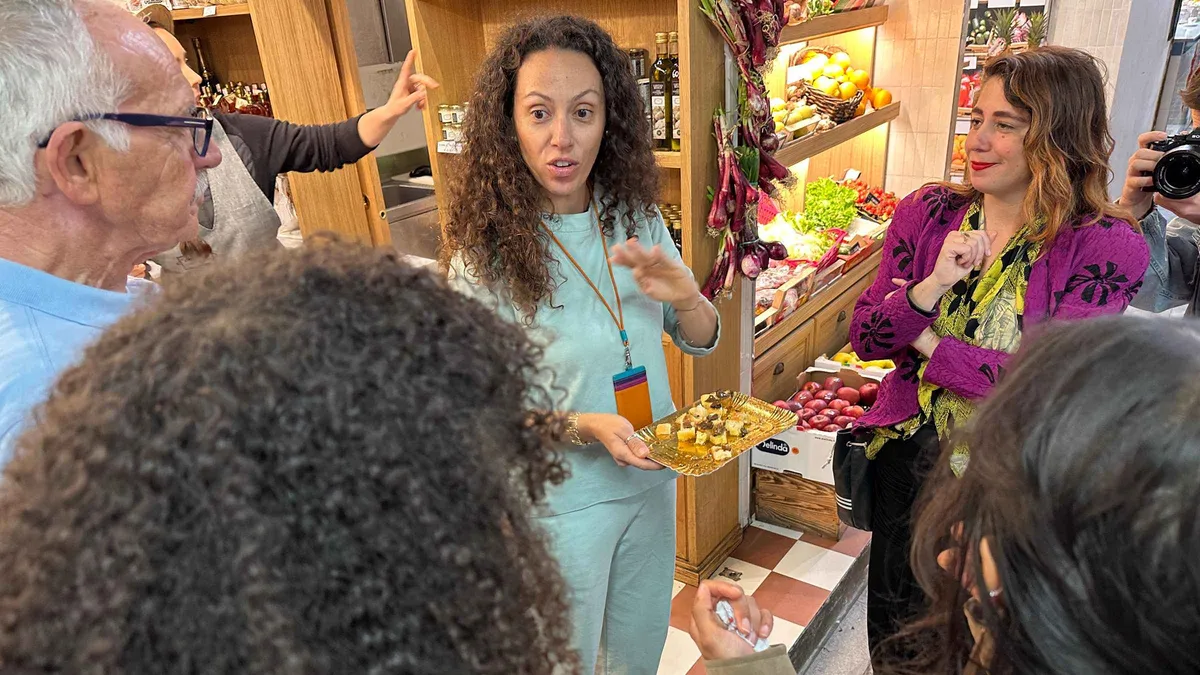
Florence: Street Food Tour with Wine & Local Guide
listed at $48.65
2.5-hour street-food walk through San Lorenzo Market and the Duomo area with several tastings and a sip of wine; morning only, no vegan or gluten-free.
Check Availability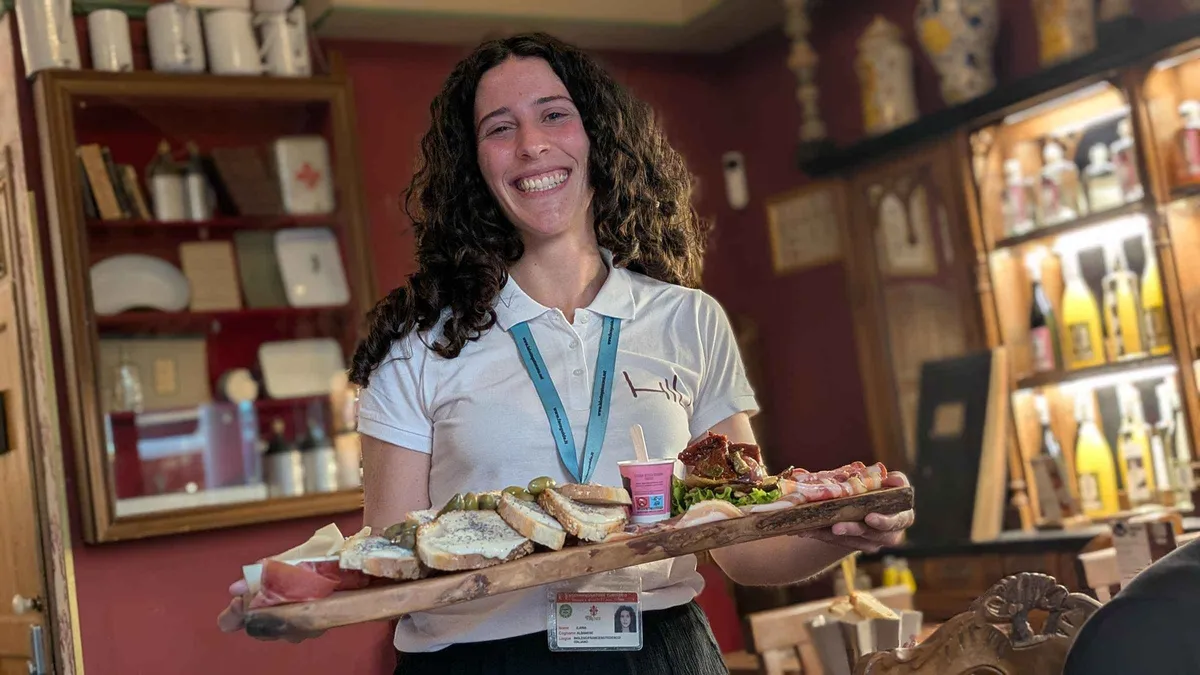 from €53
Top rated
from €53
Top rated
Florence: Street Food Walking Tour with Wine
listed at $62.55
2.5-hour licensed-guide street-food walk with tastings and drinks included, past the Duomo and Ponte Vecchio. Not for vegans or gluten intolerance.
Check Availability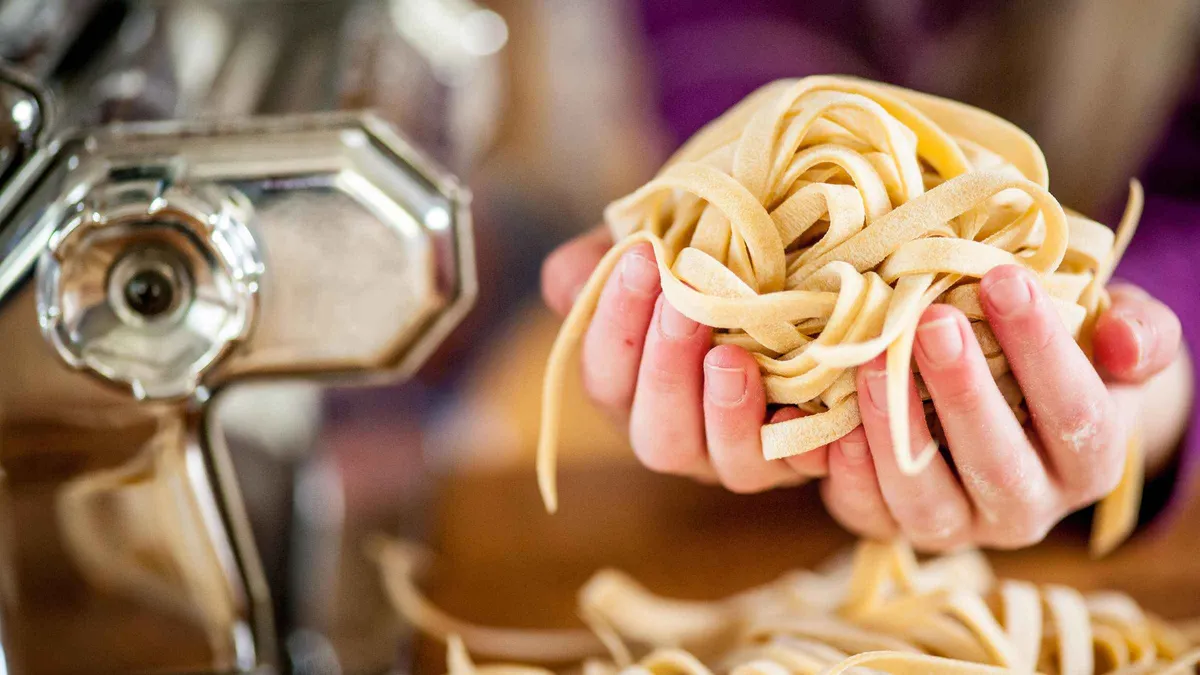 from €16
Best seller
from €16
Best seller
Florence: Pasta Cooking Class with Unlimited Wine
listed at $18.53
Make three fresh pastas with a chef inside a 1200s tower once owned by Dante's wife's family, then eat it all with unlimited Tuscan wine.
Check Availability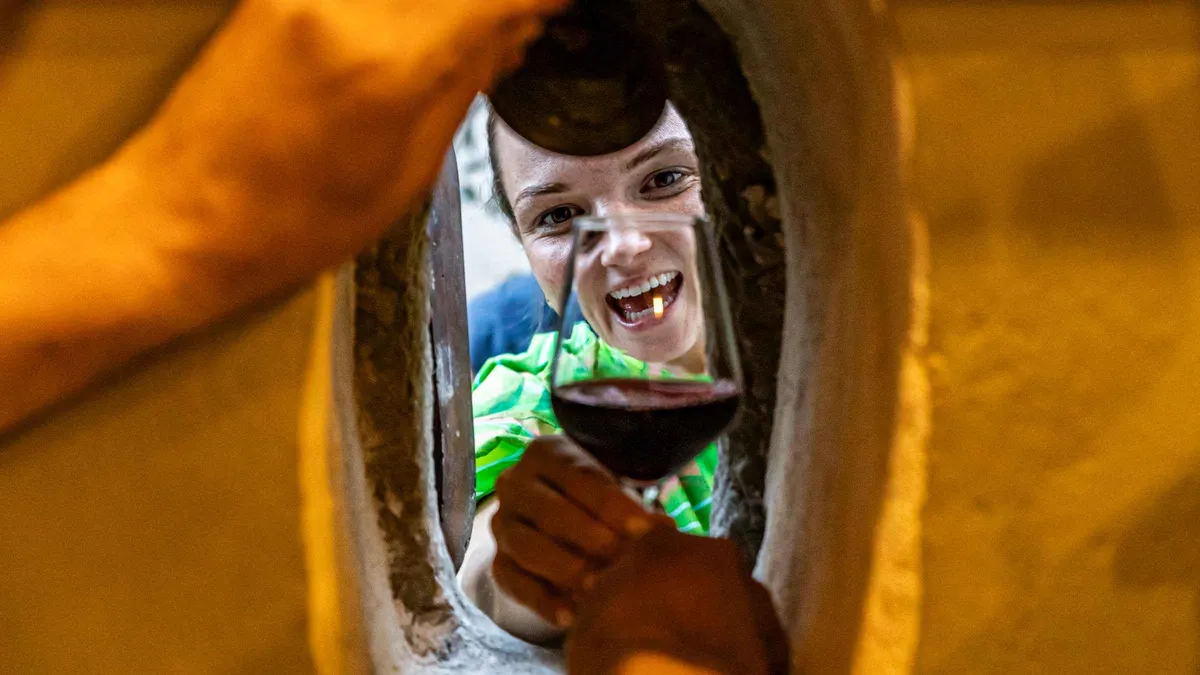 from €108
Florence: Sunset Food & Wine Tour with Tastings
listed at $126.26
3.5-hour Oltrarno food and wine walk at sunset: prosecco welcome, Negroni, 4 wines from a wine window and cellar, cheeses, wild boar stew, gelato.
Check AvailabilityPrices, ratings and details are the platform's own. Dollar figures are the listed prices. The platform bills in your account's currency.
Where To Go Next
The market building, not just its food
Ground-floor stalls, the leather market outside, hours and how to use it: the market building itself.
8 minutes' walk from the DuomoThe other market quarter
Sant'Ambrogio, the market Florentines shop at, and the streets around it: the Santa Croce quarter.
11 minutes' walk from the DuomoEating with a guide
Cooking classes, street-food walks and the sunset wine tour, compared with what each excludes: every food tour and cooking class compared. Or start again with things to do in Florence.
From €16Where to Go Next for Food and Drink
This page is about what Florentines eat and how the bill works. These pages name the places.
Eating In Florence: Questions
What food is Florence famous for?
Bistecca alla fiorentina — a loin steak on the bone, grilled rare — plus lampredotto and trippa from the street carts, ribollita in the cold months, and schiacciata bread. The full list, with the official definition of each dish, is in the nine things Florentines actually eat.
How is bistecca alla fiorentina priced?
By weight, per kilo or per etto (100 grams), not per portion. The certifying consortium's reference cut is a 1.2 kg piece of loin, 5 cm thick, which is a plate for two people — ask what the steak weighs before it is cooked. See the weight rule.
What exactly is lampredotto?
The fourth chamber of the cow's stomach, the abomasum, boiled for two to three hours and served in a roll dipped in its own broth. Regione Toscana registers it as a traditional product of the province of Florence; the detail is in the tripe carts.
What is the coperto and do I have to pay it?
A fixed per-person cover charge for the table setting and bread. It is standard in Tuscany and legitimate, and it has to be written on the menu before you order. We found no official page setting or capping the amount, so we publish none — see reading the bill.
Do you tip in restaurants in Florence?
There is no obligatory service percentage. Rounding up, or leaving small change after a good meal, is the norm; a fifteen or twenty per cent tip is not expected. Some tourist-facing places add a servizio line themselves, which the menu must declare — see reading the bill.
Why does coffee cost more when I sit down?
Bars run two tariffs — one at the counter, a higher one for table service — and both are legitimate as long as they are displayed. Drink the espresso standing at the bar and you pay the counter price. The comparison is in reading the bill.
Can I drink the tap water in Florence?
Yes. Ask for acqua del rubinetto in a restaurant, though a tourist-facing place may only offer bottled. Outside, the Comune di Firenze maps its active high-quality fountains, run by Publiacqua and free to use — see water.
Where can I eat in the middle of the afternoon?
Most kitchens shut between roughly 15:00 and 19:30. The first-floor food hall in the market building is open every day 9:00 to 23:00, which makes it the reliable answer at that hour — see when the kitchen is actually open.
Florentine Food On Video
Three clips that show the counters, the queues and the portions before you are standing in front of them.
Florence Street Food Guide: What Locals Actually Eat
Walks the counter food this page describes — tripe, panini, market stalls — and what the queues look like.
Video: RomeWiseTop 5 Best Street Foods in Florence
A street-food route done on foot, useful for seeing how ordering at a cart actually works.
Video: Travels with Matteo & Micha10 Must-Try Foods in Florence
Shows the size of a bistecca on the board, which is the argument for splitting one between two.
Video: Naick & KimVideos load from YouTube only when you press play.
Prices, hours and terms are set by the venue or operator and confirmed at checkout.
We may earn a commission if you book through one of our links, at no extra cost to you. Full affiliate disclosure