 Florence City Guide
Florence or Venice: Which City to Choose
Florence or Venice is the question every first Italy itinerary runs into, and this site, a guide to what to see in Florence, is going to answer it without pretending the answer is always Florence. The two cities are two hours apart by train and could hardly be less alike. One is a compact Renaissance capital whose treasure hangs indoors, the other is an amphibious medieval improbability whose treasure is the city itself. This page compares them across seven dimensions, using the official prices of Venice's institutions, the Florence tickets on this page and the daily budgets this site has already built for Florence. Where Venice wins a dimension, it says so. Dollar figures are approximations at €1 = $1.17.
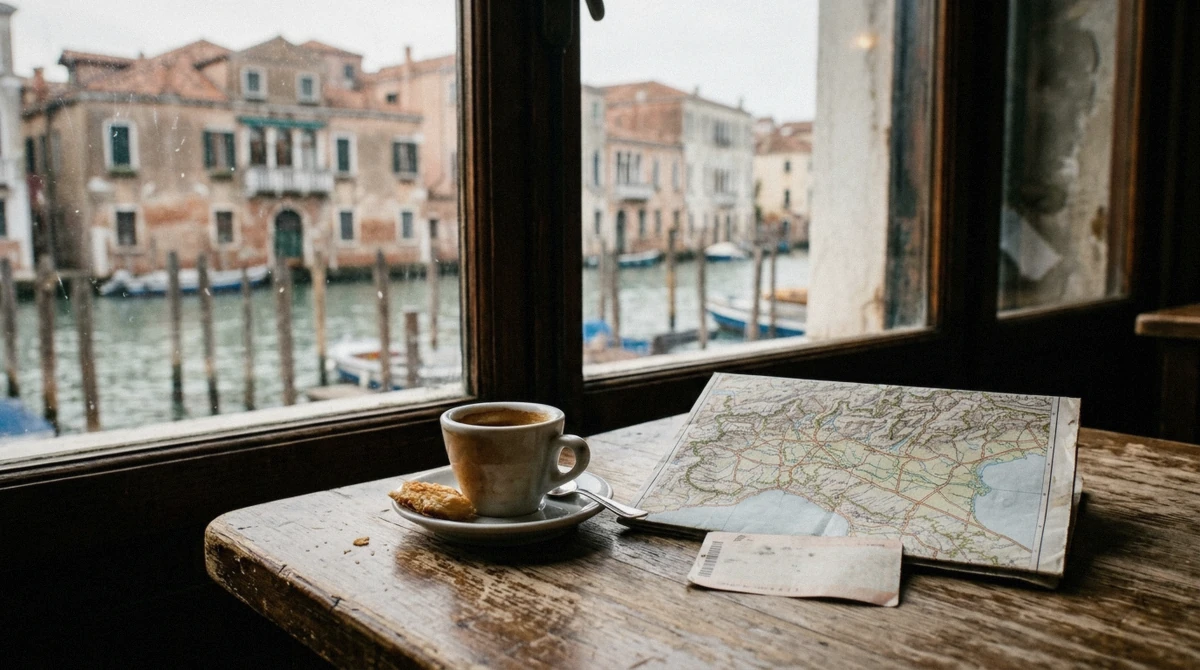
Quick answer The verdict, who each city suits, and the train fact that dissolves the dilemma
Choose Florence if art, food and using one base for a week matter most; choose Venice if the city itself — canals, silence after dark, no cars — is the experience you are travelling for. Florence is the cheaper day and the better base; Venice is the more singular place and wins its own evenings outright. The train between them takes about two hours, so a trip of five nights or more should simply do both.
Key takeaways
- Florence's careful day costs about €101 a person, against a Venice day where the Doge's Palace alone is €35 at standard price. The full Florence budget shows every line
- Florence's big three, the Uffizi, the David and the dome, are on the tickets index, and a reserved Uffizi entry with audioguide costs €16 (about $19)
- Italo runs Florence to Venice in about 2 hours from €18.90 (about $22), 11 times a day — the two cities chain, they do not compete
- Venice's day-visitor access fee is not currently charged: its own portal says the 2026 trial ended on 27 July
- If you can only take one, decide on the seven dimensions below — three go to Florence, two to Venice, two are honest draws
Size and Walkability: Two Small Cities, One Without Wheels
Both cities are genuinely walkable, which already puts them ahead of most of Europe. Florence's entire centre — cathedral to Pitti Palace, across the river — is about a twenty-five minute walk end to end, flat the whole way, with a €2 (about $2.30) bus fare on the 2026 sheet for the two climbs that are not (Piazzale Michelangelo and Fiesole). You can land at the station and be at the Duomo on foot in ten minutes, dragging a suitcase without incident.
Venice is smaller still on the map and slower on the ground. There are no cars at all, which is the point, and also no straight lines: the city is a maze stitched together by more than four hundred bridges, every one of them stepped. A fifteen-minute route on the phone becomes thirty with luggage, and anyone with a stroller, a heavy case or limited mobility feels every bridge. The water buses fill the gap at a price the operator declines to print — more on that in the cost section.
The honest verdict: Florence wins on ease, Venice wins on wonder. Walking Florence is pleasant; walking Venice is the attraction. If getting lost delights you, that is a point for Venice. If it stresses you, believe yourself.
The Headline Art and Sights
On art in frames and on plinths, Florence wins, and it is not close. The Uffizi holds Botticelli's Primavera and Birth of Venus plus the densest run of Renaissance painting anywhere. The Accademia holds Michelangelo's David, and the Bargello holds Donatello. A reserved Uffizi entry with audioguide costs €16 (about $19) and a timed David entry with audio app €28 (about $33). The tickets index covers every door, and the cathedral dome adds a 463-step climb on a dome climb pass at €53 (about $62), set out on the Duomo tickets page.
Venice's counter-argument is that its best artwork is the city. St Mark's Basilica is a Byzantine gold cave. The basilica alone is €10 (about $12) on the official individual tariff, and €30 (about $35) buys the complete ticket with the Pala d'Oro, museum and horses' loggia, according to the Procuratoria's own price page. The Doge's Palace ticket is €35 at standard price, or €30 booked at least 30 days ahead, and includes the Correr Museum, the Archaeological Museum and the Marciana Library. Titian, Tintoretto and Veronese are all over the city's walls and ceilings rather than gathered into one gallery.
So the dimension splits by temperament. Florence is for concentrated, canonical art you queue for and stand in front of. Venice is for a townscape that is itself the masterpiece, with paintings scattered through it. A first-time art pilgrim should take Florence. A person who glazes over in galleries after ninety minutes should take Venice and feel no guilt.
Food and Eating Culture
Florence eats better for less, mostly because it never stopped cooking for its own residents. The trattoria repertoire — ribollita, a proper bistecca, the €5-ish lampredotto sandwich culture around the markets — is covered on the where-to-eat guide, and the two market halls, Mercato Centrale and Sant'Ambrogio, keep everyday food anchored to everyday prices. Our careful-day food estimate for Florence is €22 a person; even the comfortable day's €80 buys serious meals.
Venice's food culture at its best is genuinely its own: cicchetti — small bar snacks eaten standing with a small glass of wine — in a neighbourhood bacaro is one of Italy's great eating rituals, and the lagoon's seafood belongs to no other city. The problem is density of the other kind: the share of kitchens cooking for people who will never return is higher in Venice than almost anywhere in Italy, and the difference between a great meal and a resentful one is which alley you chose. Venice done knowledgeably eats wonderfully; Venice done by proximity to a landmark eats badly at Florence's comfortable-day prices.
Verdict: Florence, on consistency and value. With one caveat stated plainly — a planned evening of bacaro-hopping in Cannaregio is a meal Florence cannot serve at any price.
What a Day Costs in Each
Florence is the day this site can price to the euro, because it already has: about €101 (about $118) a person for a careful day, €210 mid-range and €306 comfortable, sharing a double midweek. Beds, tourist tax, tickets, transport and estimated food are all itemised on the Florence costs page. The big three tickets, the Uffizi, the David and the dome climb, come to €97 (about $113) booked through the cards on this page.
Venice's sights bill runs higher. The two headline interiors alone, the Doge's Palace at €35 (about $41) standard and St Mark's complete ticket at €30 (about $35), cost €65 before the campanile at €15 or a single scuola or gallery. Getting around adds what Florence's flat, walkable centre never charges. The water buses are unavoidable for the outer islands and tempting everywhere, and AVM, the operator, prints no fares at all on the pages we could reach. Its fares pages direct you to a call centre. That refusal is itself worth knowing: budget for water transport in Venice as a real daily line, not small change.
One charge you can currently ignore is the famous day-visitor access fee. The scheme's own portal, cda.ve.it, states that from 27 July the fee 'is no longer in effect'. The trial, which charged day visitors on 60 selected dates between April and July, has ended, and whether it returns in 2027 had not been announced when we checked. Overnight guests were exempt even while it ran.
Verdict: Florence is the cheaper city, on beds, on food and on the incidentals. Venice's premium is real and worth paying knowingly, once. Florence being the cheaper pick, the way to lock in its big three is to compare the best tours in Florence before you book anything.
The Scorecard, Dimension by Dimension
Seven dimensions summarised from the sections on this page. Venice prices are the official ones from tickets.basilicasanmarco.it, palazzoducale.visitmuve.it, cda.ve.it and italotreno.com. Florence's daily budgets come from this site's own costs page.
| Dimension | Florence | Venice | Verdict |
|---|---|---|---|
| Walkability | Flat, compact, luggage-proof | Car-free maze, 400+ stepped bridges | Draw — ease vs wonder |
| Headline art | Uffizi, David, the dome | St Mark's, Doge's Palace, the city itself | Florence |
| Food | Trattoria value, two market halls | Bacari and lagoon seafood, more traps | Florence, with a caveat |
| Cost of a day | About €101–€306 a person, sourced | Higher beds, €65 for two headline interiors, unpublished boat fares | Florence |
| Crowds | Saturates around three sites, hot in July and August | Acute by day, empties beautifully at night | Venice after dark, Florence off-season |
| Day-trip base | Eight destinations within about 90 minutes | Lagoon islands, then Padua and Verona | Florence |
| Uniqueness | The finest Renaissance city | Like nowhere else on earth | Venice |
Three to Florence, two to Venice, two honest draws — which is why the real answer for a longer trip is the train between them. Figures current in Q3 2026.
Crowds and Seasonality
Neither city will let you pretend you discovered it. Florence's crush concentrates around three points — the cathedral square, the Uffizi corridor to the Ponte Vecchio, and the Accademia's block — while five minutes away the Oltrarno or San Marco district stay liveable. Its worst enemy is heat: July and August average 30°C highs with no breeze, which is why the best-time guide points to April–May and late September–October, and why January and February buy the emptiest galleries of the year.
Venice's crowding is structural rather than seasonal: cruise calls and day trippers pour into the strip between the station, the Rialto and St Mark's roughly from mid-morning to late afternoon, every month. The city measured the problem seriously enough to trial charging day visitors for entry — the 2026 experiment described above — which is all you need to know about scale. The compensation is total: sleep in Venice and the same streets at 22:00 are silent, lapping and nearly empty, an experience day visitors never see.
Verdict: a draw that splits by tactic. Venice rewards staying overnight more than any city in Italy; Florence rewards choosing the right month and the 08:15 museum slot.
As a Base for the Region
This dimension is the least arguable. From Florence, eight genuinely different days out leave from the same two stations: Pisa, Siena, San Gimignano, Chianti, Lucca, the Cinque Terre, Bologna and the Val d'Orcia, each with its own page and its published transport arithmetic on the day-trips hub. A week based in one Florence apartment can contain four different Tuscanies.
Venice's excursions are the lagoon first — Murano, Burano and Torcello, which are lovely and belong to the same visit rather than being an escape from it — and then the Veneto by rail: Padua and Verona are both worthwhile, Vicenza between them. It is a respectable list, but it is thinner, and the islands aside, every trip starts by leaving the one thing you came for.
Verdict: Florence, decisively. If your Italian trip is one base plus radiating days out, that base is Florence and the itineraries are already built — three days in the city before you spend a single day leaving it.
The Train Between Them
The logistics are the anticlimax that dissolves the whole dilemma. The Florence–Venice line is 253 km, and Italo's own route page times the journey at about 2 hours, prices it from €18.90 (about $22), and runs 11 departures a day from Firenze Santa Maria Novella to Venezia Santa Lucia, calling at Bologna, Padua and Venezia Mestre on the way. Trenitalia's Frecciarossa runs the same corridor with its own departures, but publishes no from-price anywhere we could read — its Base fare is search-only — so no Trenitalia figure is printed here.
Two practical notes. First, book Venezia Santa Lucia, not Mestre: Santa Lucia is the island station whose front steps land on the Grand Canal, Mestre is the mainland. Second, the cheap fares on both operators are non-refundable advance tickets tied to one train — the from-price is real, but it is the early-booking price, not the walk-up one.
At two hours station to station, Venice is even feasible as a very long day trip from Florence — first train up, last train back — though this page's honest advice is in the FAQ below: it shows you Venice at precisely its worst hours.
Pick Florence or Pick Venice, by the Trip You Are Taking
If the Renaissance — painting, sculpture, architecture — is the reason for the trip
Florence. The Uffizi, the David and the dome have no Venetian equivalent; start with the tickets index and book the €16 reserved Uffizi entry.
If you want the place itself to be the experience, and art is secondary
Venice. No other city offers its streets; stay overnight and own the evenings.
If you are watching the budget
Florence — the careful day is about €101 a person, fully itemised on the costs page, and the walking is free.
If you plan one base and several day trips
Florence, with eight destinations on its doorstep. Venice radiates far less.
If this is a honeymoon or a once-only romantic trip
Venice, and spend for a room on the island — its nights are the whole argument.
If you have five or more nights in northern Italy
Both, in one line: Venice first, then the 2-hour train down to Florence — the split is in the section below.
Doing Both: the Honest Minimum
The honest minimum for both cities is four nights — two in each — and it will feel tight in Florence. Two Venice nights buy one full day plus two of the magic evenings; two Florence nights buy one museum day and one everything-else day, which means choosing between the Uffizi and the Accademia rather than seeing both calmly (that choice has its own guide).
Five or six nights is where the pairing stops costing anything: three in Florence, two or three in Venice, connected by the 2-hour train. Do Venice first if you are flying into Venice Marco Polo; otherwise do Florence first and treat Venice as the finale — it is the better closing image, and its airport makes an easy exit. Give Florence the extra night whenever you have an odd number: it has more that must be booked ahead (how far ahead, exactly) and more to do on a rainy or closed-Monday day.
What not to do: do not split a three-night trip. One night in Venice plus two in Florence delivers the worst of each — you pay two cities' worth of check-ins to rush both. Three nights or fewer, pick one city and take the whole of it.
Booking the Florence Half
Whichever way the comparison lands, the Florence bookings are the time-critical ones. Each card opens the operator's own page and live calendar. Prices are the euro figures on each listing, and the platform charges in your own currency at checkout.
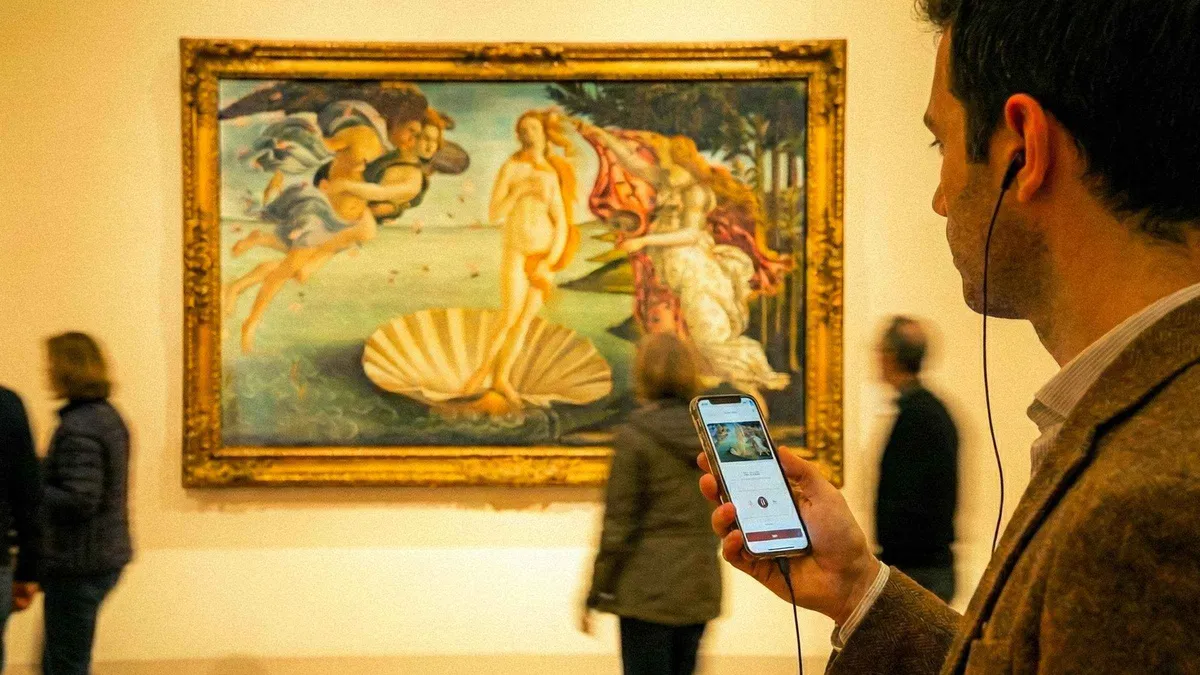 from €16
Florence: Uffizi Gallery Reserved Entry Ticket & Audioguide
listed at $18.53
Reserved timed Uffizi ticket with a downloadable audioguide app in 6 languages and unlimited time inside. Nominative ticket — bring matching ID.
Check Availability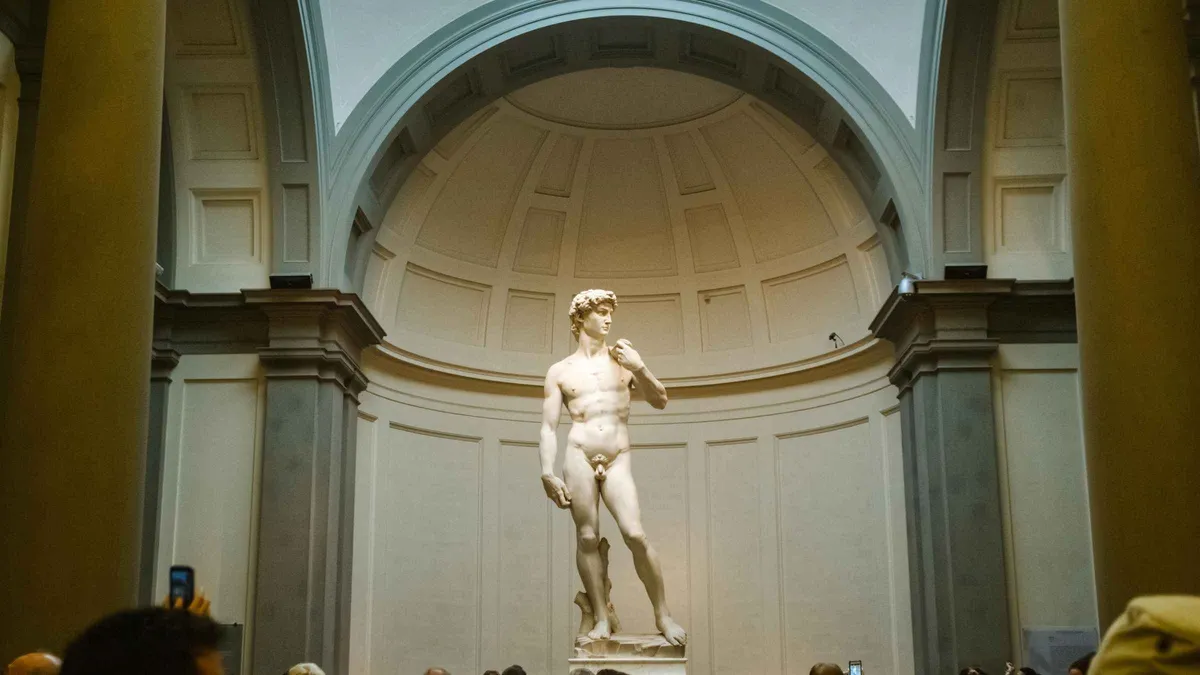 from €28
Best seller
from €28
Best seller
Florence: Timed Entry to Michelangelo's David + Audio App
listed at $33.30
Reserved timed entry to the Accademia for Michelangelo's David with a digital audio app. Slot is binding; collect the ticket 15 minutes before.
Check Availability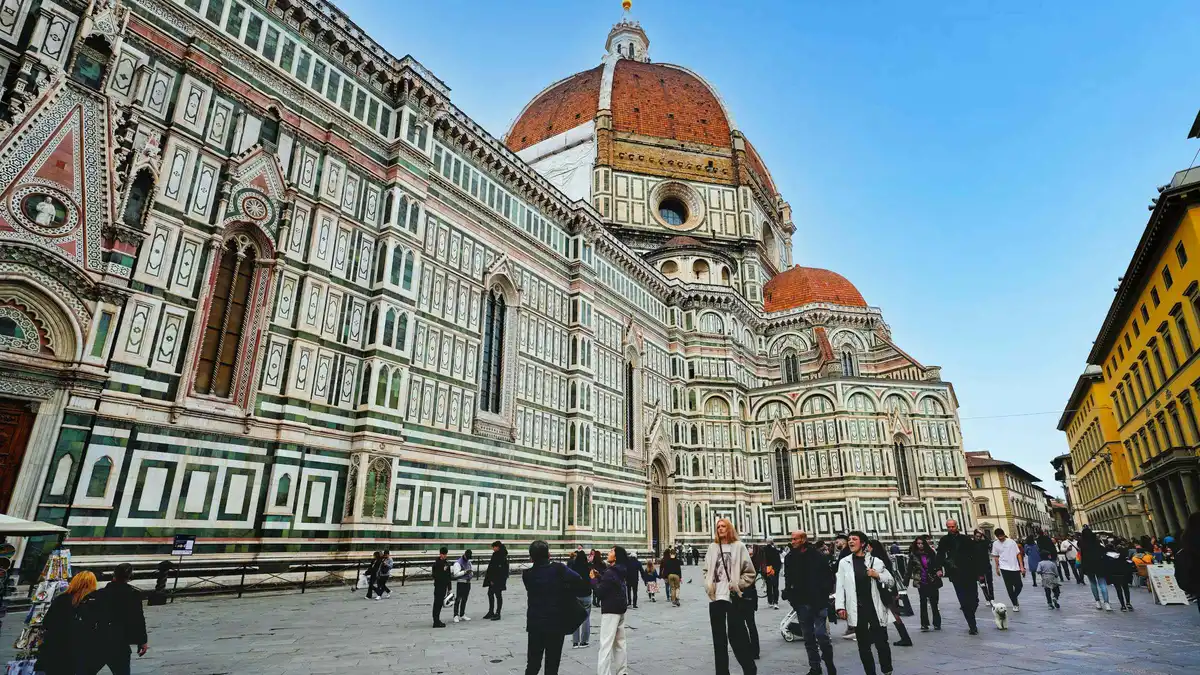 from €53
Florence: Brunelleschi's Dome Climb Entry Ticket & Duomo
listed at $61.77
Timed dome-climb ticket plus a 3-day Duomo complex pass (cathedral, baptistery, museum, crypt, bell tower) and an audio app. 463 steps, no lift.
Check Availability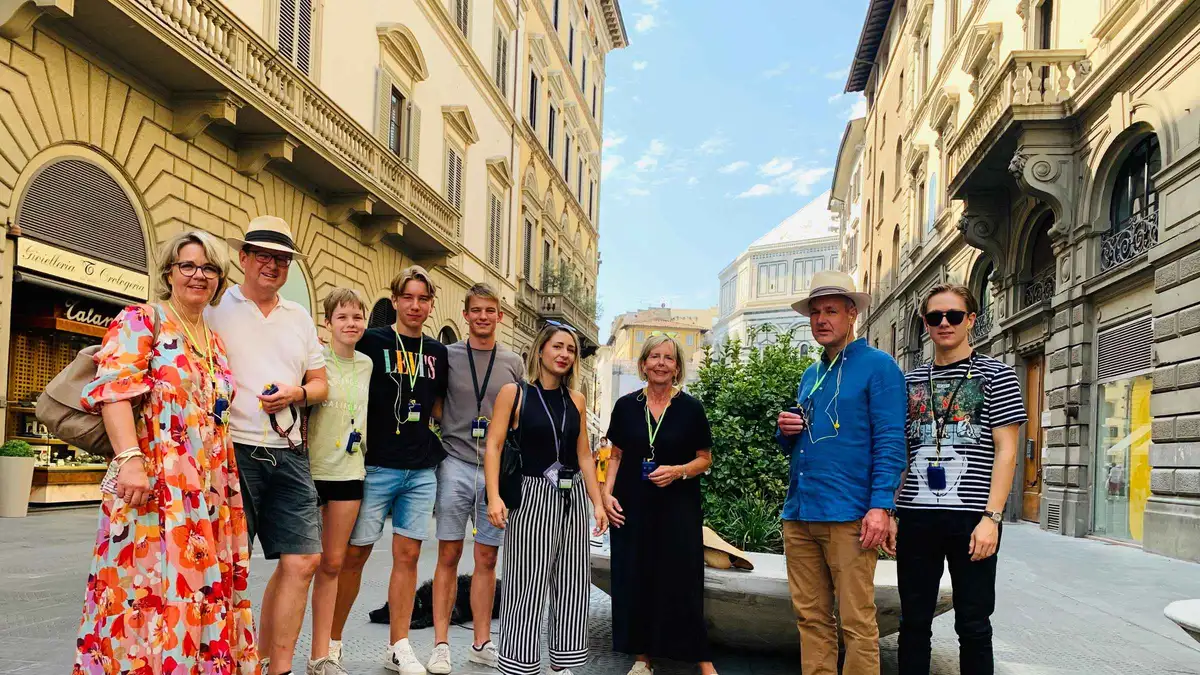 from €17
Florence: Highlights Walking Tour with Expert Guide
listed at $20.27
90-minute small-group highlights walk (Duomo, Piazza della Signoria, Ponte Vecchio) in 8 languages, with free luggage storage. Runs rain or shine.
Check AvailabilityPrices, ratings and details are the platform's own. Dollar figures are the listed prices. The platform bills in your account's currency.
Florence or Venice: the Questions That Decide It
Is Venice worth visiting as a day trip from Florence?
It is feasible — about 2 hours each way on the train, 11 Italo departures a day from €18.90 plus Trenitalia's own — but you would arrive with the day-tripper flood and leave before the city empties, which is exactly the wrong slice of the Venetian day. If Venice gets six of your hours, spend them; but one overnight is worth three day trips. The trains are covered in the logistics section above.
Which is cheaper, Florence or Venice?
Florence, on every line we can source. Its careful day is about €101 a person fully itemised on the costs page; Venice's two headline interiors alone are €65 at standard prices (Doge's Palace €35, St Mark's complete ticket €30), its island beds carry a premium, and its water-bus operator publishes no fares on the pages we could reach — an unbudgetable line Florence simply doesn't have.
Does Venice still charge the day-visitor entry fee?
Not at the time of writing. The official portal cda.ve.it states that from 27 July the access fee 'is no longer in effect'. The trial charged day visitors on 60 selected dates from April to July and has ended. Overnight guests were exempt even while it ran. Whether the scheme returns in 2027 had not been announced when this page was written, so check the same portal before a spring visit.
Which city is better for a first trip to Italy?
If it is one city only, Florence: it delivers the fullest single version of Italy — art, food, streets, day trips — and it is the easier city to operate, as the three-day itinerary shows. Venice is the better single spectacle but the narrower experience. If your first trip has five nights or more, the question dissolves: do both, two hours apart by train.
Which has better museums, Florence or Venice?
Florence, by weight of collection: the Uffizi and the Accademia against Venice's Doge's Palace, Gallerie dell'Accademia and Correr. Venice's counter is generous bundling. The €35 Doge's Palace ticket includes three further museums, and costs €30 booked 30 days ahead. Florence sells each door separately, with a reserved Uffizi entry at €16 and a timed David entry at €28. What each ticket includes is set out on the Florence tickets index.
Is Venice or Florence better with limited mobility?
Florence, clearly. Its centre is flat and its step-free routes are mapped on the accessibility guide. Venice's four-hundred-plus stepped bridges make wheels genuinely hard: accessible itineraries exist along the vaporetto spine, but they constrain the city severely. This is one dimension where the romantic answer and the practical answer are simply different cities.
The Same Choice, Argued on Camera
Three comparisons filmed by people who took both cities seriously: a head-to-head verdict, a sensory comparison, and working tour guides giving their personal picks.
Italy: Florence vs Venice — Which City Should You Visit?
A direct head-to-head on sights, food and feel, landing on a verdict rather than a shrug.
Video: Travelling With ConVenice vs Florence: A Sensory City Comparison
The two cities compared on how they sound, smell and move — the dimension no scorecard captures.
Video: A Sense of Travel with Michael MathenyIs Florence or Venice Better? Tour Guides Answer
Working guides who know both cities give their personal answers, with reasons that match this page's scorecard.
Video: Travel by LuxeVideos load from YouTube only when you press play.