 Florence City Guide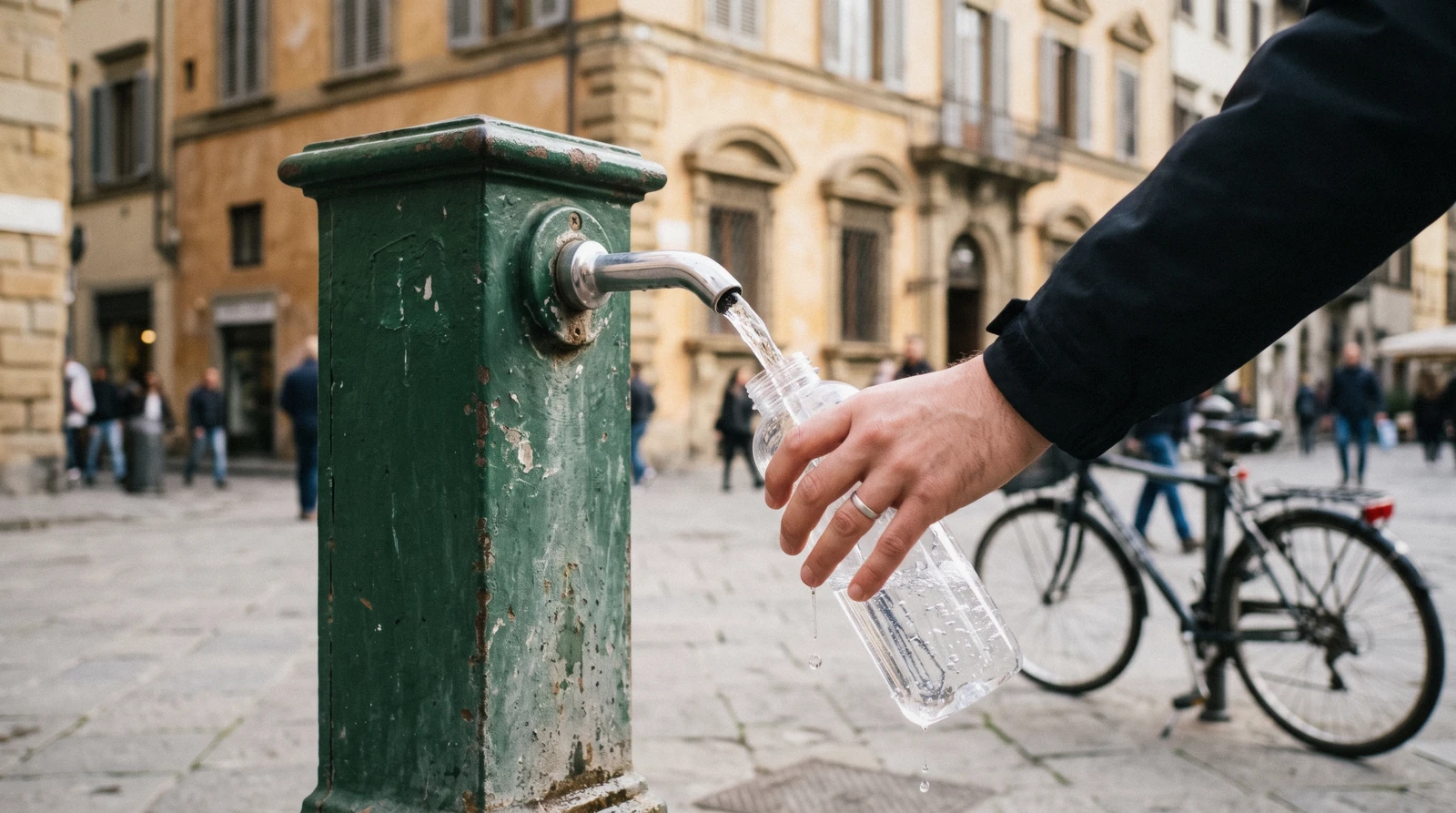
Can You Drink Tap Water in Florence?
Can you drink tap water in Florence? Yes, everywhere — and this is not folk wisdom but published data: Publiacqua, the utility that runs the city's water, posts the quality readings for the Florence network on its own site. This page is deliberately short. It gives you the numbers behind the yes, the nine free public fountains and what nobody publishes about them, how the bottled-water custom works at a restaurant table, and what a refill saves. The fuller food-and-drink picture, fountains included, lives on where to eat in Florence.
Quick answer Yes it's safe, where the free fountains are, and how to ask for it at a table
Yes — Florence tap water is safe to drink, and Publiacqua, the utility that supplies it, publishes the analysis: about 90% of the city's supply is Arno river water treated at the Anconella plant with sand and activated-carbon filtration, ozone and chlorine dioxide, and the Florence network readings show soft-limits chemistry: pH 7.6, nitrates at 4 mg/L, sodium at 26 mg/L. The only thing you may notice is a faint chlorine edge, which is exactly what the city's nine free fontanelli filter out.
Key takeaways
- The city's free high-quality fountains — the fontanelli — sit outside the tightest tourist core; the water section of our food page maps the habit and the gap around the cathedral
- In a restaurant, bottled arrives by default: ask for "acqua del rubinetto" and accept that a tourist-facing place may decline — the custom, explained honestly below
- Carry a bottle no bigger than half a litre and it passes museum bag rules too — the Accademia's own limit is 0.5 l, on the Accademia tickets page
- A refilled bottle is the cheapest drink you will carry on the €17 highlights walking tour or the €42 street food tour
What Publiacqua Publishes About the Water
The proof behind the yes. Publiacqua's per-town quality pages (publiacqua.it/qualita/firenze) print the measured chemistry of the Florence network; Italian drinking water is governed by Legislative Decree 18/2023, and the utility's monitoring programme runs from raw intake to the tap. The readings below are the ones a visitor can actually taste or notice.
Around 90% of Florence's supply starts as Arno river water and is treated at the Anconella plant — clarification, sand filtration, granular activated-carbon filtration, then disinfection with ozone and chlorine dioxide. That treatment chain is why the tap is safe, and also why it sometimes carries a faint chlorine taste that bottled water does not.
| Parameter | Florence network reading | What it means at the tap |
|---|---|---|
| pH | 7.6 | Neutral to slightly alkaline — unremarkable, which is what you want |
| Total hardness | 20 °f | Moderately hard: expect scale in a kettle, nothing at all in a glass |
| Nitrates | 4 mg/L | A low reading; nitrates are the parameter people worry about, and this is far from anything worth worrying over |
| Sodium | 26 mg/L | Low — a litre of Florence tap carries less sodium than a slice of bread |
| Calcium / magnesium | 63 / 11 mg/L | The minerality; this is water with some taste, not distilled blankness |
| Nitrites / ammonia | absent | The contamination flags — both clean |
One negative finding worth printing: Publiacqua's Florence page gives the readings but does not date the sampling period on the page itself, so we can say what the network reads, not which week it was drawn. When a parameter ever does go out of range anywhere in its territory, the utility's practice is to post the exceedance and the all-clear in its news section — silence is the normal state.
The Fontanelli: Free Water, Refined
The fontanelli di alta qualità are small kiosks that dispense the same network water run through extra filtration, chlorine-free — free to anyone with a bottle. This site already covers them in the water section of where to eat; here is only what a thirsty visitor needs.
Publiacqua's own fountain pages list nine active fontanelli in the Florence comune, among them Piazza delle Cure (n. 102), Piazza della Vittoria (n. 88), Piazza Dalmazia (n. 65) and Piazza dell'Isolotto (n. 106) — and the Comune di Firenze publishes the active list as an open dataset under a CC-BY 4.0 licence. Each kiosk carries its own published quality readings, which is more than any bottled brand pins to a wall. Two honest limits.
First, the gap: there is no fontanello in the tightest tourist streets around the cathedral — fill up before you walk in, or plan on the Mercato Centrale, two minutes from San Lorenzo. Second, the sparkling question: some kiosks dispense chilled and sparkling water, but neither Publiacqua's fountain pages nor the open dataset says which — the machine itself is the only reliable label, so treat sparkling as a bonus you discover, not a stop you plan.
Restaurants and the Bottled-Water Custom
The moment that confuses first-timers: you sit down, and a bottle of water you did not order arrives with the bread. Here is the honest version of what is happening.
Bottled water at the table is custom and margin, not regulation: we found no rule that requires an Italian restaurant to serve bottled or forbids it from pouring tap, and no official body publishes what the bottle should cost — it is simply a priced line on the menu, like the coperto beside it. The waiter will ask "naturale o frizzante?" (still or sparkling) and bring a bottle unless you head that off.
The script: ask for "acqua del rubinetto" — tap water. A neighbourhood trattoria will usually oblige; a tourist-facing place may say bottled only, and that refusal is allowed, mildly annoying and not worth a scene. What you should never do is pay for water twice: refill before lunch at a fountain, and let the restaurant bottle be a choice rather than a reflex. The rest of the table ritual — the coperto, tipping, how the bill works — is on where to eat in Florence, and where the bottle sits in a whole day's spending is on what Florence costs. Once the acqua del rubinetto question is settled at the table, the neighborhood trattoria you chose this way also makes a natural base between the best tours in Florence, so it is worth pairing your eating plan with the florence guided tours that fit around lunch.
The Refill Habit, Sized for Florence
One bottle, refilled, covers a Florence day better than any bought drink — but the city sets two constraints worth knowing before you pack.
Size the bottle at half a litre. That is not a style tip: the Accademia's bag rules cap water at 0.5 l, larger bags and bottles get refused at the door, and the other state museums run similar regimes — details sit with each ticket page, starting from the tickets index. A small bottle passes everywhere and refills in seconds.
Time it to the heat. From June the stone centre stores the afternoon sun — July's average daytime high is 30.4°C (87°F) — and the fountains do their real work between sights, not at them. The pattern that works: fill at breakfast, again before any afternoon walking — every day plan built around things to do in Florence assumes a bottle in the bag, and treat the climb to Piazzale Michelangelo as a two-refill undertaking in summer. Unless a street fountain is explicitly marked as drinking water, do not assume it is — the marked ones and the fontanelli are the safe set.
The Bookings a Water Bottle Belongs On
Three walking-heavy bookings where the refill habit earns its keep — hours on your feet, most of it outdoors, and a guide who knows where the nearest fountain is. Prices are as listed by the operator.
 from €17
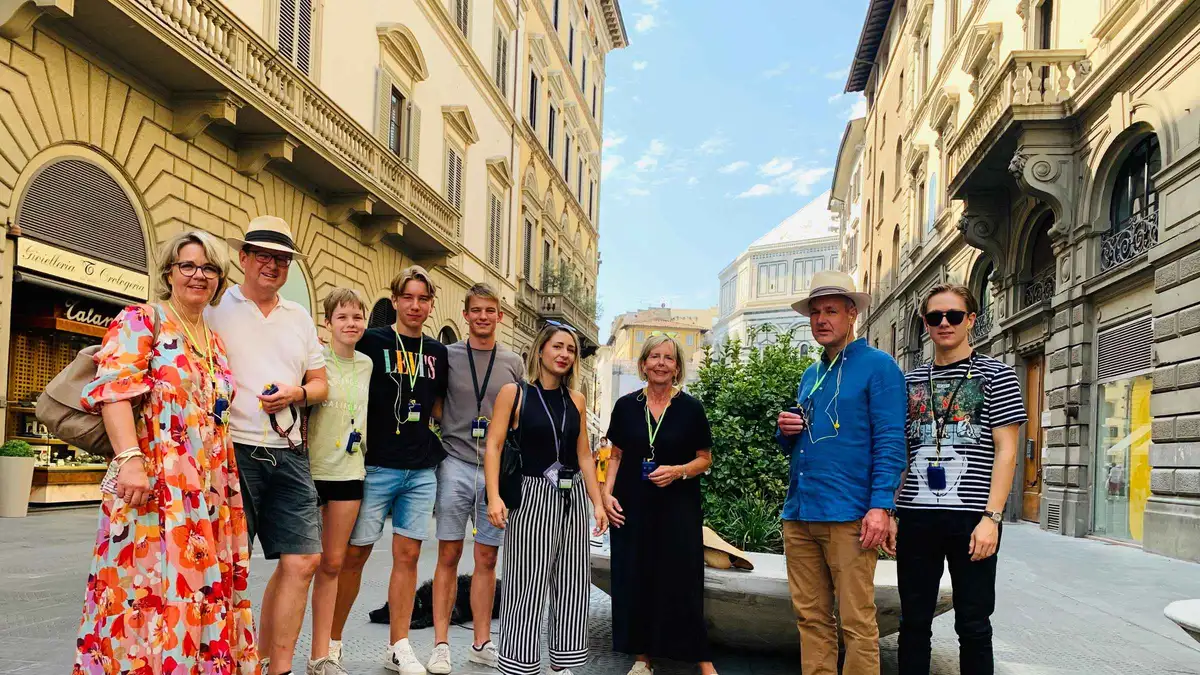
Florence: Highlights Walking Tour with Expert Guide
listed at $20.27
90-minute small-group highlights walk (Duomo, Piazza della Signoria, Ponte Vecchio) in 8 languages, with free luggage storage. Runs rain or shine.
Check Availability from €42
Top rated
from €42
Top rated
Florence: Street Food Tour with Wine & Local Guide
listed at $48.65
2.5-hour street-food walk through San Lorenzo Market and the Duomo area with several tastings and a sip of wine; morning only, no vegan or gluten-free.
Check Availability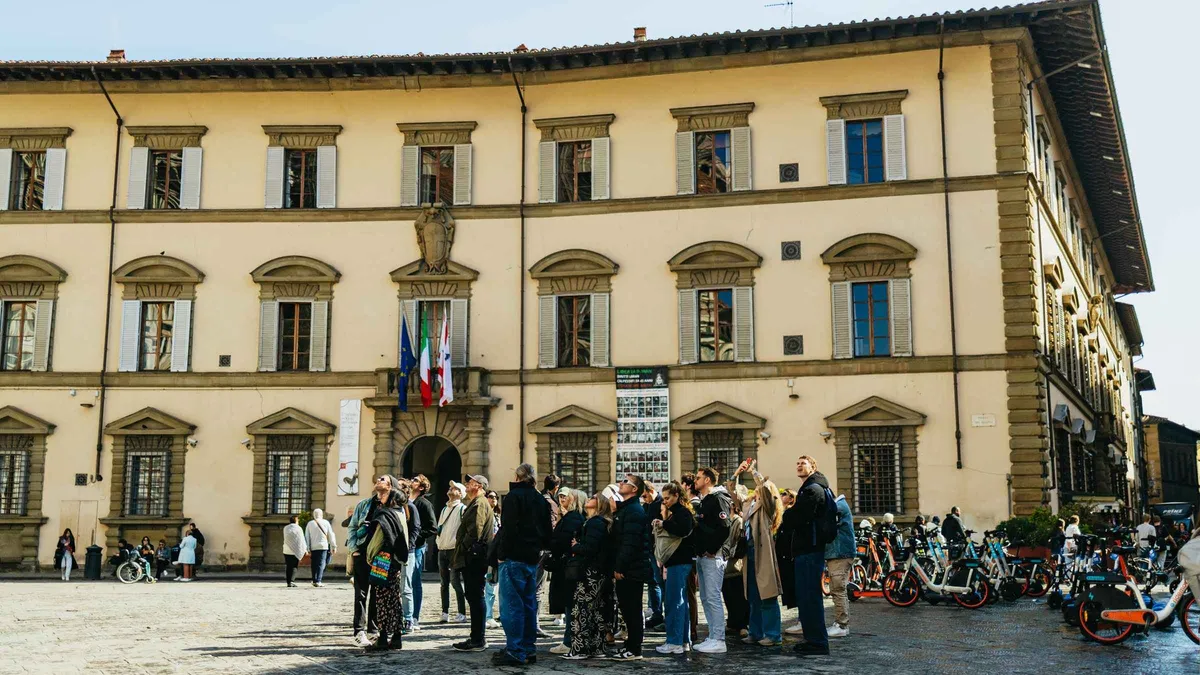 from €12
Top rated
from €12
Top rated
Florence: Renaissance and Medici Tales Guided Walking Tour
listed at $13.90
Two-hour storytelling walk on the Medici and the Renaissance in English or Spanish, ending with local eating and shopping tips. Cheapest tour here.
Check AvailabilityFigures current in Q3 2026.
Prices, ratings and details are the platform's own. Dollar figures are the listed prices. The platform bills in your account's currency.
Where the Rest of the Water Story Lives
This page answers the safety question; these pages hold the neighbouring answers.
Where to eat in Florence
The full fontanelli treatment, the coperto, tipping and the table customs the water bottle is part of. Where to eat.
The fountains, mappedWhat Florence costs a day
Where drinks sit in a daily budget, and which food figures on this site are estimates rather than official prices. What it costs.
The savings lineBest time to visit Florence
The thirty-year monthly averages behind our July warning, and the months when a water bottle is optional again. When to visit.
The heat calendarSafety and scams
Emergency numbers, the 24-hour pharmacy and the rest of the staying-well layer this page does not repeat. Safety in Florence.
The health basicsFlorence Tap Water: Questions
Can you drink tap water in Florence?
Yes, everywhere in the city. The supply is treated at the Anconella plant with sand and activated-carbon filtration plus ozone and chlorine dioxide, Italian drinking water is governed by Legislative Decree 18/2023, and Publiacqua publishes the Florence network's readings — pH 7.6, nitrates 4 mg/L — summarised above.
Why does Florence tap water taste of chlorine?
Because most of it is river water disinfected with chlorine dioxide on its way to you — a treatment fact, not a warning sign. Chill it, or refill at a fontanello: the kiosks run the same water through extra filtration and dispense it chlorine-free.
Where are the free water fountains in Florence?
Publiacqua listed nine active fontanelli in the comune when we checked — Piazza delle Cure, Piazza della Vittoria, Piazza Dalmazia and Piazza dell'Isolotto among them — but none in the tightest streets around the cathedral, so fill up before you walk into the centre. The fontanelli section has the honest limits.
Do any Florence fountains give sparkling water?
Some fontanelli dispense chilled and sparkling water, but no published source — neither Publiacqua's fountain pages nor the city's open dataset — says which ones. The machine itself is the only reliable label, so treat a sparkling tap as a find, not a plan.
Will a restaurant serve tap water if I ask?
Often, not always. Ask for "acqua del rubinetto"; a neighbourhood trattoria will usually pour it, while a tourist-facing place may say bottled only — which is custom and margin, not law, and within its rights. The table ritual gives the script.
Can I take a water bottle into Florence's museums?
A small one. The Accademia's published bag rules cap water at 0.5 l and refuse large bags at the door, and the other state museums run similar checks — so carry a half-litre bottle, refill outside, and check the door rules on each ticket page from the tickets index.
Prices, hours and terms are set by the venue or operator and confirmed at checkout.
We may earn a commission if you book through one of our links, at no extra cost to you. Full affiliate disclosure