 Florence City Guide
Florence or Rome: Which City Deserves Your Days
Florence or Rome is a comparison between different orders of magnitude, and a guide to what to see in Florence owes you honesty about that up front. Rome is roughly seven times the city, with the Colosseum, the Vatican, the Pantheon and twenty-seven centuries stacked on top of each other, and there are trips for which Rome is simply the correct answer. What Florence offers instead is concentration. The entire Renaissance sits inside a thirty-minute walk, the city runs more calmly, and Tuscany is at its back door. This page compares the two across seven dimensions, using the official Rome prices published by colosseo.it, museivaticani.va and italotreno.com and the budgets this site has already sourced for Florence, then answers the three-way question with Venice for a first Italy trip. Dollar figures are approximations at €1 = $1.17.
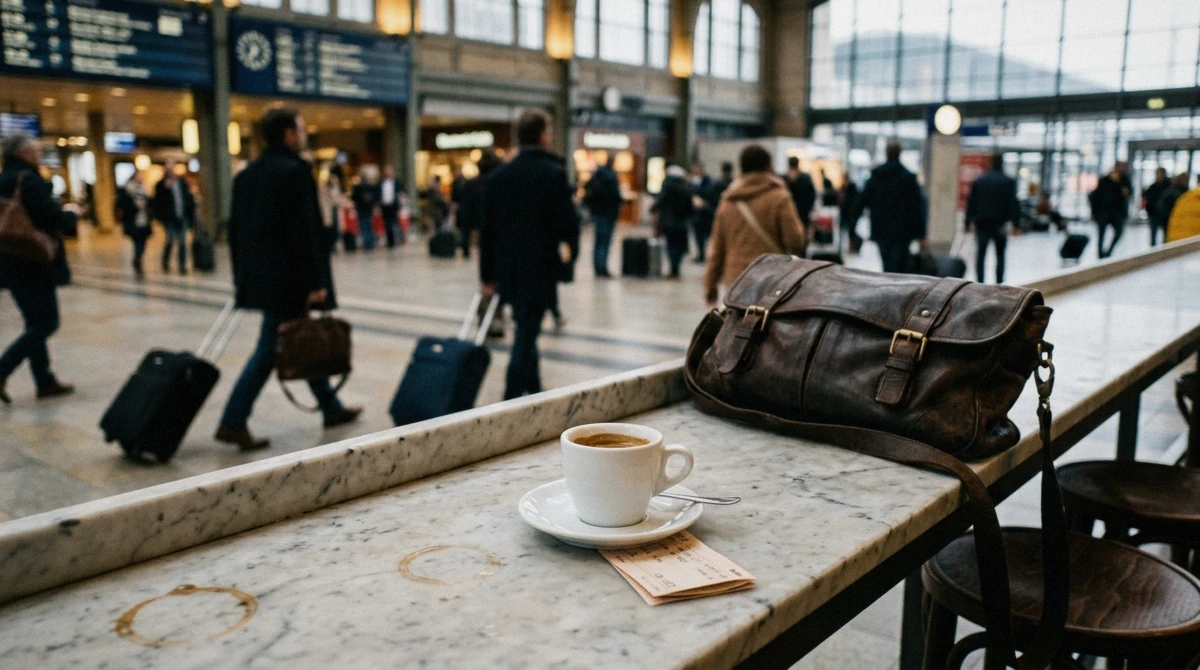
Quick answer The verdict, the surprising ticket-price comparison, and the 90-minute train fact
Choose Rome if this is your one shot at Italy and headline sights decide it — the Colosseum, the Vatican and the Pantheon outgun any single city's list, Florence's included. Choose Florence if you prefer depth to breadth: a compact, walkable centre, the Renaissance at full strength, better day trips and a gentler pace. With five or more nights, do both — the train takes about an hour and a half.
Key takeaways
- Rome's two giants cost less than Florence's big three: Colosseum from €18 and Vatican Museums €20 (€25 booked online), against €97 (about $113) for the Uffizi, the David and the dome climb, with the whole Florence day on the costs page
- Florence's big three are on the tickets index, and a reserved Uffizi entry with audioguide costs €16 (about $19)
- Italo times Rome–Florence at about 1 hour 25 minutes from €14.90 (about $17), 32 departures a day — the easiest city pairing in Italy
- Rome needs transit and queue management; Florence is walked end to end in about 25 minutes
- Adding Venice? The three-city triangle section gives the honest split for 7 to 10 days
Size and Walkability: a Town Against a Capital
Florence's historic centre is small enough to be a single habit: the cathedral to the Pitti Palace is about twenty-five minutes on foot, the station to the Duomo ten, and after a day you navigate by the dome without a map. Nothing on a first-visit list requires a vehicle except the viewpoint at Piazzale Michelangelo and Fiesole, both a €2 bus ride covered on the getting-around guide.
Rome does not work like that. The centre is glorious to walk but the sights are scattered across a genuinely big city — Vatican to Colosseum is an hour on foot through traffic, so you learn the metro and the buses, you budget transfer time, and you plan days by district or you bleed hours. None of that is a flaw; it is what being a capital of 2.8 million people means. But it changes the texture of a visit: Rome is a city you operate, Florence is a city you inhabit.
Verdict: Florence, for anyone whose ideal trip involves putting the phone away. Rome's scale is the price of Rome's contents — and on the headline sights, that price buys something Florence cannot match.
The Headline Sights
Here Rome wins, and a Florence guide should say it cleanly. The Colosseum, the Forum and the Palatine on one ticket; the Vatican Museums ending in the Sistine Chapel; St Peter's; the Pantheon; the Trevi Fountain and Piazza Navona for free between them — no city in Europe stacks icons like this. The official prices are modest for what they open: the Parco archeologico del Colosseo sells its 24-hour arena ticket at €18 (about $21) covering Colosseum, Forum and Palatine, with the Full Experience including the underground at €24 valid two consecutive days, both released online 30 days ahead; the Vatican Museums charge €20 at the door or €25 with the €5 skip-the-line booking online, Sistine Chapel included. Both prices come from the official sites.
Florence's list is shorter and narrower — the Uffizi, the Accademia's David, the cathedral and its dome, the Ponte Vecchio — but within its speciality it is unbeatable: if the Renaissance is why you are coming to Italy, its whole story stands within one walkable list, told at a density Rome never reaches. Rome has better ruins and a bigger canon; Florence has the single most concentrated art experience in Europe.
Verdict: Rome on breadth, and breadth is what first trips usually want. Florence takes this dimension only if your interest is specifically the Renaissance — in which case it takes it completely. Florence's Renaissance concentration is exactly what florence guided tours compress into a few well-planned days, so the best tours in florence are worth comparing once the city itself has won you over.
Food and Eating Culture
This one is close to a draw, and the differences are of character rather than quality. Rome's cucina romana is a repertoire with global reach — carbonara, cacio e pepe, amatriciana, carciofi alla giudia in the old ghetto — served across thousands of trattorie, with Testaccio and Trastevere still cooking for Romans. The depth of choice is enormous; so, near the Trevi and Navona, is the density of tourist kitchens.
Florence answers with product over technique: the bistecca alla fiorentina, the €5-ish lampredotto stand, ribollita, and two working market halls — Mercato Centrale and Sant'Ambrogio — inside the walkable centre, all mapped on the where-to-eat guide. Our sourced estimate puts a careful Florence food day at €22 a person; Rome's equivalent runs similar, with the same rule in both cities — walk two streets away from any monument before sitting down.
Verdict: a draw on quality. Rome wins on range — it is a bigger kitchen with more registers, including Italy's best Jewish-Roman cooking. Florence wins on compactness: every good table is twenty minutes from your bed, and its market-hall eating culture is more usable to a visitor than Rome's more scattered equivalents.
What a Day Costs in Each
Florence's day is fully priced on this site's costs page: about €101 (about $118) a person careful, €210 mid-range, €306 comfortable, sharing a double midweek, with every line sourced. The cheapest room band inside the walls started at €145 for two, and the tourist tax runs €6 to €8 a night. The big three tickets, a reserved Uffizi entry at €16, a timed David entry at €28 and a dome climb pass at €53, come to €97 (about $113).
Rome's headline sights, surprisingly, cost less than that ticket bill. Colosseum-Forum-Palatine at €18 plus the Vatican Museums at €25 booked online comes to €43 (about $50) for the two anchors of a Roman first visit, and the Pantheon, Trevi and the churches fill days for almost nothing. We have not built a sourced bed-and-board budget for Rome and will not invent one. Rome's room stock spans a wider range in both directions, and its ticket bill for the canonical sights is lower than Florence's, which this Florence site concedes with a straight face.
What tips daily costs back toward Florence is the operating overhead. Rome adds transit fares and cross-town time to every day, while a Florence day spends nothing to move. Verdict: on sights, Rome costs less. On the total day, call it even and unproven, because we print no Rome bed figure we have not sourced.
The Scorecard, Dimension by Dimension
Seven dimensions summarised from the sections on this page. Rome prices are the official ones from colosseo.it, museivaticani.va and italotreno.com. Florence figures come from this site's own pages, linked in each section.
| Dimension | Florence | Rome | Verdict |
|---|---|---|---|
| Walkability | Whole centre in a 25-minute walk | Big-city distances, metro and buses | Florence |
| Headline sights | Uffizi, David, the dome | Colosseum, Vatican, Pantheon and more | Rome |
| Food | Bistecca, markets, compact | Deeper repertoire, wider range | Draw |
| Sight tickets | €97 for the big three | €43 for the two giants, much free between | Rome |
| Crowds | Saturates around three points | Absorbs crowds better, except Vatican and Colosseum | Rome, narrowly |
| Day-trip base | Eight Tuscan days out from one station | Ostia and Tivoli near, the rest far | Florence |
| Pace and calm | A town you inhabit | A capital you operate | Florence |
Three to Florence, three to Rome, one draw — which is the truthful shape of this comparison: it is decided by the kind of trip, not by the better city. Figures current in Q3 2026.
Crowds and Seasonality
Rome, counter-intuitively, wears its crowds better. It has more surface area to absorb them: the Vatican Museums and the Colosseum are as dense as anywhere on earth, but two streets from either, or anywhere in Testaccio, Monti or the Aventine, the city is simply going about its business. Book the two giants' entry slots and the rest of Rome rarely queues.
Florence's crush is structural because the town is small: the cathedral square, the Uffizi corridor and the Accademia's block concentrate nearly every visitor into a few hundred metres, and in high season the centre itself feels like a venue. The escape valves are real — the Oltrarno, San Marco, the 08:15 museum slots — but they require intent. Heat compounds it: July and August average 30°C highs, which is why the best-time guide steers first visits to April–May and late September–October, with January and February as the quiet bargain.
Verdict: Rome, narrowly, for crowd tolerance — with the caveat that both cities' worst days are self-inflicted by season. Either city in late October beats either city in July.
As a Base for the Region
Florence wins this dimension outright. Eight distinct day trips leave from its stations — Pisa, Siena, San Gimignano, Chianti, Lucca, the Cinque Terre, Bologna, the Val d'Orcia — each with its transport arithmetic published on the day-trips hub. Basing a week in Florence and radiating outward is one of the best-value structures in European travel.
Rome's near orbit is thinner than its size suggests: Ostia Antica and Tivoli's villas are the two great close-range days, both excellent. After that the distances jump — Naples and Pompeii make a long day (about 240 km south, an hour and ten on the fast train to Naples and a local connection beyond), Florence itself becomes the day trip, and Umbria's hill towns ask for early starts. Rome is a destination more than a base; its own contents are why.
Verdict: Florence, decisively — and this is the dimension that most often settles the whole question for second visits to Italy, when the capital's checklist is already done.
The Train Between Them
The two cities are joined by the busiest high-speed corridor in the country. Italo's own route page puts Rome–Florence at 261 km in about 1 hour 25 minutes, from €14.90 (about $17), with 32 departures a day out of Roma Termini and Tiburtina into Firenze Santa Maria Novella. Trenitalia's Frecciarossa runs the same corridor at similar timings but publishes no from-price anywhere we could read — its Base fare is search-only — so no Trenitalia figure is printed here.
The practical consequences: connecting the two cities costs you half a morning, not a day, so 'or' becomes 'and' on any trip of five nights or more; and Florence works as a genuine day trip from Rome (or the reverse) when a schedule truly cannot spare a night — arrive by 09:30, leave at 19:00, and the walkable centre makes the short version honest in Florence in a way Rome's distances never allow. The one-day plan is built for exactly that arrival.
As everywhere in Italy, the from-prices are advance, train-specific, non-refundable fares; walk-up flexible tickets cost multiples of them. Book the leg when your dates fix, not at the platform.
Rome, Florence and Venice: the Three-Way Question
Most people asking about these two are really planning the classic triangle, so here is the three-way answer in one place. The three cities are not three of a kind: Rome is the headline capital, Florence the concentrated art town and the base for Tuscany, Venice the singular spectacle — this page's companion guide compares Florence and Venice dimension by dimension.
The geometry is kind: the three sit on one rail spine, Rome–Florence in about 1 hour 25 and Florence–Venice in about 2 hours on Italo's published timings, so the triangle needs no flights and no backtracking. For seven nights, the honest split is three in Rome, two or three in Florence, one or two in Venice, travelling Rome → Florence → Venice and flying home from Venice Marco Polo — or the exact reverse. For ten nights, give Florence the surplus and spend it on Tuscany: the extra days buy Siena, Chianti or the Val d'Orcia, which is better marginal value than a fourth day of Roman queues.
With only five nights, drop a city rather than thinning all three — two cities properly beats three at a trot. Which to drop follows from everything above: skip Venice if art and food drive the trip, skip Rome if you have seen it or crowds wear you down, and skip Florence — this site says with a smile — only if the Renaissance genuinely leaves you cold.
Pick Florence or Pick Rome, by the Trip You Are Taking
If it is your first and possibly only trip to Italy
Rome. The canonical sights are there, and its two giants cost €43 booked online. Do Florence as the 90-minute add-on if any days remain.
If the Renaissance is the reason you are coming
Florence, completely. Start with the tickets index and the €16 reserved Uffizi entry, and give the dome its climb.
If you want one base and day trips around it
Florence — eight destinations from one station. Rome is a destination, not a base.
If you dislike managing transit, queues and distances
Florence. Everything on a first-visit list is a walk away; the three-day plan never boards a bus.
If you thrive on big-city energy and want nightlife beyond dinner
Rome. Florence's evenings are lovely and short; Rome's keep going.
If you have seven or more nights
Both — 1 hour 25 minutes apart by train — and read the triangle section before adding Venice.
Booking the Florence Half
Whichever way the comparison lands, Florence's slots are the ones that sell out first. Each card opens the operator's own page and live calendar. Prices are the euro figures on each listing, and the platform charges in your own currency at checkout.
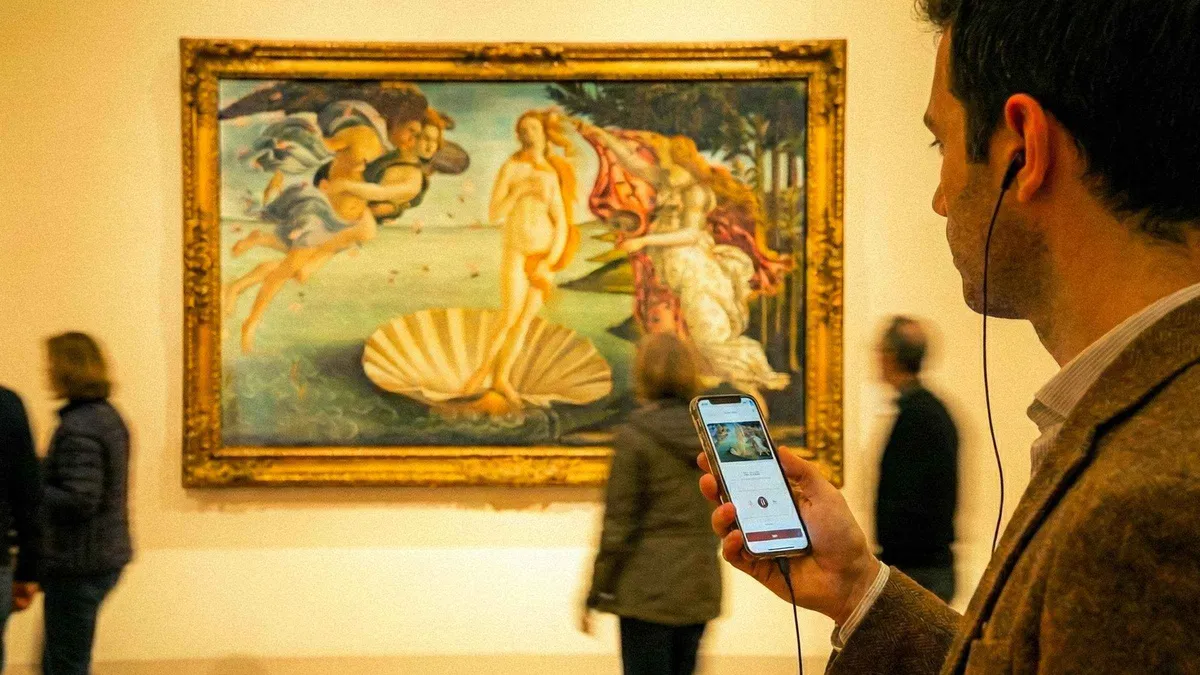 from €16
Florence: Uffizi Gallery Reserved Entry Ticket & Audioguide
listed at $18.53
Reserved timed Uffizi ticket with a downloadable audioguide app in 6 languages and unlimited time inside. Nominative ticket — bring matching ID.
Check Availability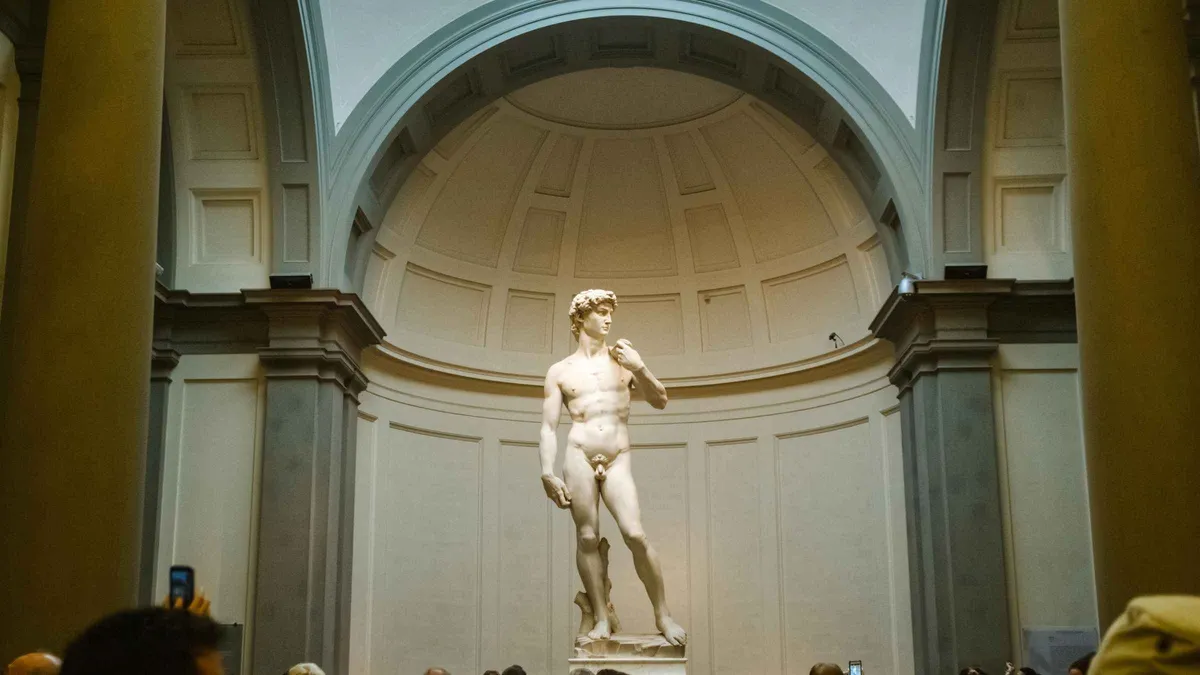 from €28
Best seller
from €28
Best seller
Florence: Timed Entry to Michelangelo's David + Audio App
listed at $33.30
Reserved timed entry to the Accademia for Michelangelo's David with a digital audio app. Slot is binding; collect the ticket 15 minutes before.
Check Availability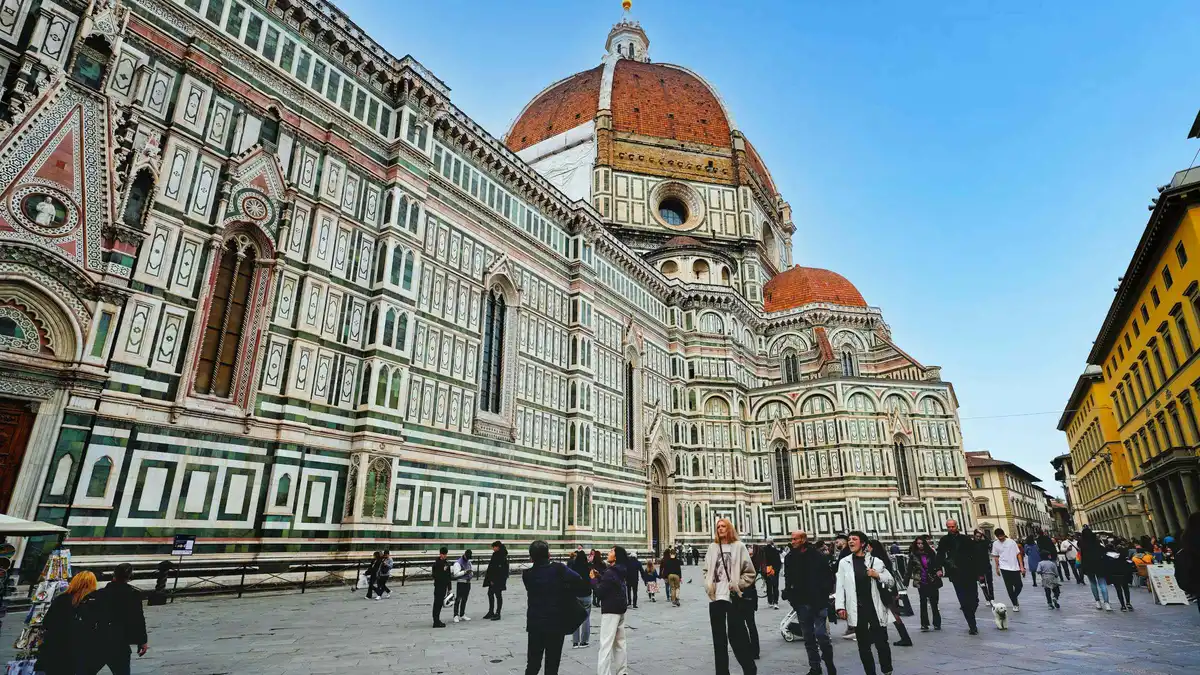 from €53
Florence: Brunelleschi's Dome Climb Entry Ticket & Duomo
listed at $61.77
Timed dome-climb ticket plus a 3-day Duomo complex pass (cathedral, baptistery, museum, crypt, bell tower) and an audio app. 463 steps, no lift.
Check Availability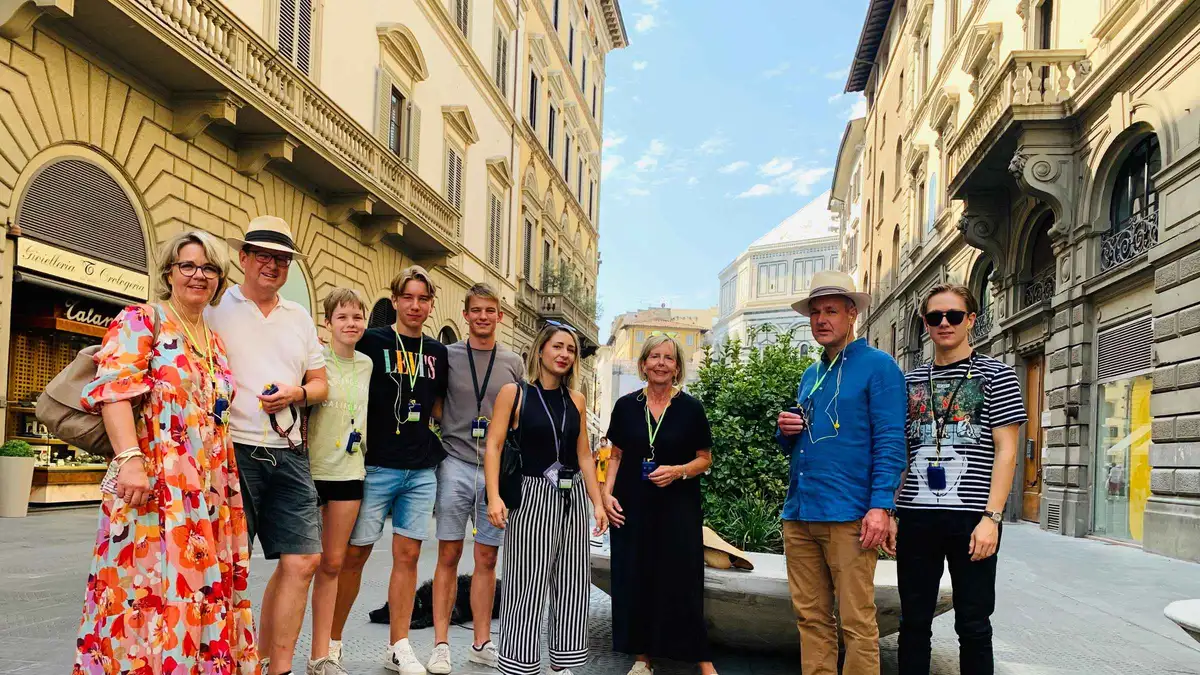 from €17
Florence: Highlights Walking Tour with Expert Guide
listed at $20.27
90-minute small-group highlights walk (Duomo, Piazza della Signoria, Ponte Vecchio) in 8 languages, with free luggage storage. Runs rain or shine.
Check AvailabilityPrices, ratings and details are the platform's own. Dollar figures are the listed prices. The platform bills in your account's currency.
Florence or Rome: the Questions That Decide It
Can you do Florence as a day trip from Rome?
Yes, and it is the rare day trip between major cities that works: about 1 hour 25 minutes each way on trains that run 32 times a day from €14.90 on Italo's published fares, and a centre compact enough that eight hours on the ground are genuinely productive. Use the one-day itinerary and book the Uffizi or Accademia slot before you board — same-day entry in season is the one thing that can sink the day.
Is Florence cheaper than Rome?
Not on museum tickets, and this Florence site says so plainly. Rome's two giants cost €43 booked online (Colosseum €18, Vatican Museums €25), while Florence's big three come to €97: the Uffizi reserved entry, the David timed entry and the dome climb pass. On beds and food the cities overlap broadly, and we print no Rome figures we have not sourced. Florence's real saving is operational. A walkable centre spends nothing on transit and loses no time to it, and the costs page itemises the whole day.
How many days does each city need?
Florence: two days for the essentials, three for comfort — the three-day plan shows the ideal shape, and more days convert into Tuscan day trips. Rome: three days is the honest minimum for the ancient city, the Vatican and the centre, and four or five sit better. That asymmetry is the quiet argument for basing longer stays in Florence and visiting Rome, rather than the reverse.
Which is better with limited time — seeing Rome or adding Venice?
If the choice is between three thin cities and two proper ones, take two: Rome plus Florence is the strongest pairing for a first trip — the capital's breadth plus the Renaissance in concentrate, 85 minutes apart. Venice versus Florence for the second slot is its own comparison; the three-way split for seven to ten nights is in the triangle section above.
Do the Colosseum and Vatican need advance booking the way Florence's museums do?
Yes — same discipline, different windows. The Colosseum's official shop releases tickets 30 days before the visit date and the popular slots go quickly; the Vatican Museums sell online with a €5 booking fee that buys skip-the-line entry, and the ticket office queue it bypasses is the worst in Italy. Florence's own booking calendar — what sells out when — is laid out in the how-far-ahead guide.
Which city is better in July and August?
Neither is at its best, but Rome copes marginally better: more shade, more space, more air-conditioned interiors to retreat into. Florence averages 30°C highs with still air, and its compact centre concentrates both the heat and the crowds — the best-time guide makes the case for April–May and late September–October in detail. If summer is your only window, both cities reward 8:00 starts and long indoor afternoons.
The Same Choice, Argued on Camera
Three takes on the decision: a straight two-city comparison, a first-timer's dilemma answered, and the full three-city triangle judged in one video.
Rome vs Florence: Food, Culture and Vibes Compared
The two cities set side by side on exactly the dimensions this page scores — food, culture and feel.
Video: Town Travel TipsShould I Go to Florence or Rome?
The first-timer's version of the question, answered with the trade-offs rather than a sales pitch.
Video: Travel With MartiRome vs Florence vs Venice: Italy Travel Comparison
All three corners of the classic triangle judged in one video — the companion to this page's three-way section.
Video: The Worldly Traveler SpeaksVideos load from YouTube only when you press play.