 Florence City Guide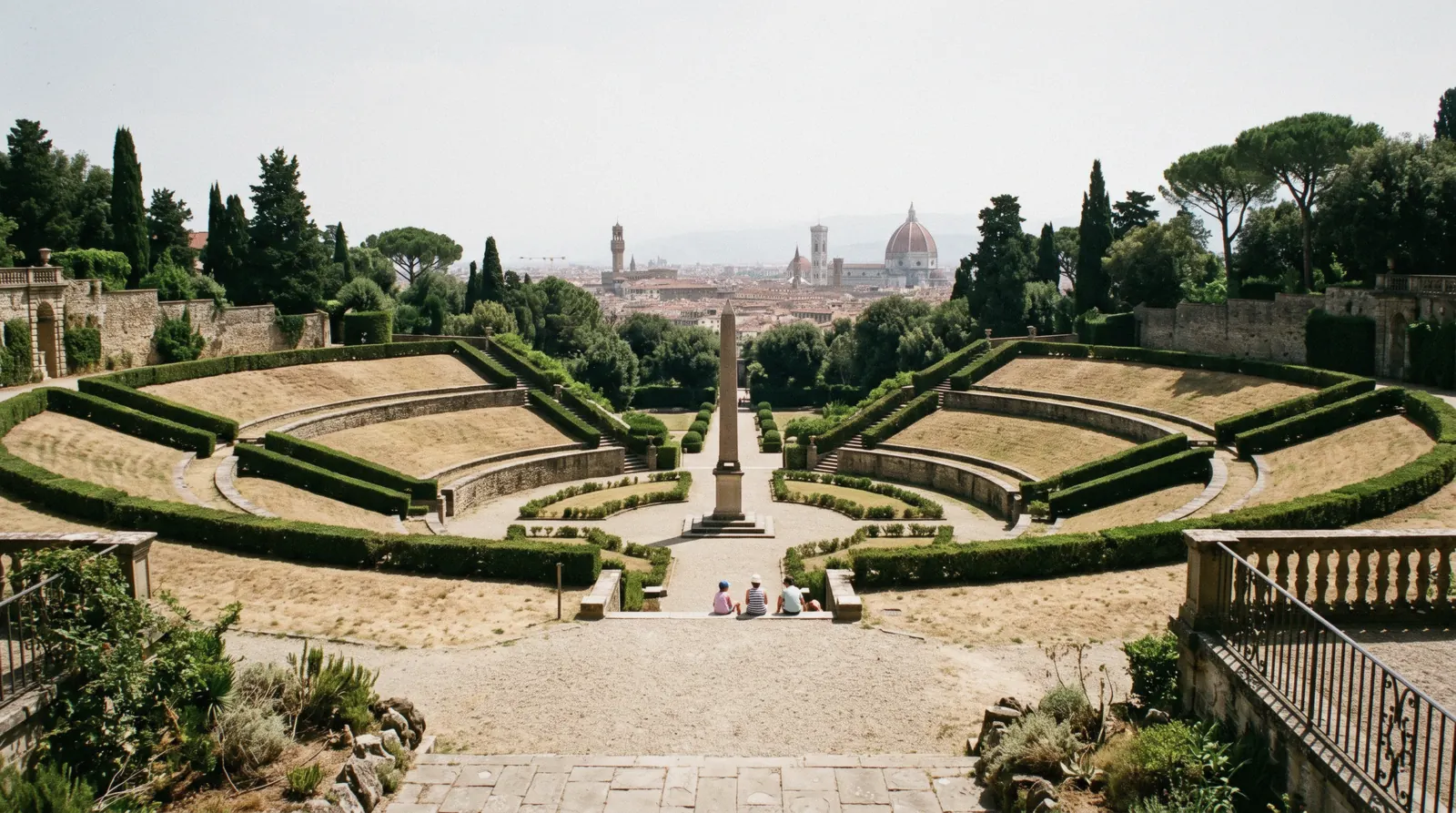
Boboli Gardens
The Boboli Gardens are the 45,000-square-metre hillside park laid out behind Pitti Palace for Eleonora di Toledo after 1549, and the place where the Italian formal garden was worked out before the rest of Europe copied it. Statues, grottoes and two long axes, all uphill: this page has the seasonal closing times, the four gates and the route that saves your legs. They are one of the few sights in what to see in Florence that need no booking at all — the ticket office takes you as you come.
Quick answer Price, the four closing times, which gate to use and how long — in three lines
A reserved Boboli and Pitti ticket costs €30 (about $35), and closing moves with the season: 16:30 from November to February, 19:10 in June, July and August. Last admission is always one hour before closing.
Key takeaways
- The gardens shut on the first and last Monday of every month — on all the other Mondays they are open while Pitti Palace and the Uffizi are closed, which makes this the best Monday morning in the Oltrarno
- Four gates get you in: through Pitti Palace, Via Romana at Annalena, Forte di Belvedere and Porta Romana. Enter at Belvedere and the whole visit is downhill — the guided tour of the palace and gardens starts at Piazza de' Pitti instead
- An Uffizi ticket does not include Boboli. The five-day Uffizi, Pitti and Boboli pass does, and the combined palace-and-garden ticket covers this and Villa Bardini for one fee
Key facts
Opening hours
| January, February, November, December | 08:15–16:30 |
|---|---|
| March and October, standard time | 08:15–17:30 |
| March (summer time), April, May, September, October (summer time) | 08:15–18:30 |
| June, July, August | 08:15–19:10 |
Closed First and last Monday of each month; 25 December (extraordinary opening on 1 January 2026)
Admission
- Adult
- €30 gardens and Pitti Palace, reserved (about $35), or €35 with Villa Bardini and eBooks (about $41)
- Reduced
- Reduced rate for EU citizens aged 18–25 with ID
- Free
- Under 18, any nationality; first Sunday of each month
Planning it
- Time needed
- Not stated by the museum; our routing: 1 h 30 for both axes, 2 h 30 with the Belvedere terrace and the Isolotto
- Book ahead
- Optional — walk-up usually fine
- Address
- Gates at Pitti Palace (Piazza de' Pitti), Via Romana (Annalena), Forte di Belvedere and Porta Romana
Four ways into the gardens
Four ways into the Boboli Gardens from the cards on this page, at the prices GetYourGuide and Tiqets list. Each one pairs the gardens with Pitti Palace, a guide or the Uffizi.
Is the garden the visit, or the half-hour after the palace?
| Option | Price | Includes | Cancel | Book |
|---|---|---|---|---|
| Palace + Boboli ticket with eBookAnyone doing palace and garden together who also wants Villa Bardini | €35 (about $41) | Palace museums, Boboli and Villa Bardini, eBooks | Non-refundable | Check Availability |
| Palace + Boboli reserved entry, TiqetsVisitors who want gardens and palace on one voucher with an audio guide | €30 (about $35) | Both sites on one voucher, city audio guide | Nonrefundable | Check Availability |
| Guided tour, 3 hPeople who want the Palatine hang explained rather than walked through | From €85 | Palatine Gallery and the gardens with a licensed guide | Free up to 24 hours before | Check Availability |
| Uffizi + Pitti + Boboli, 5 daysAnyone spreading the Uffizi, Pitti and Boboli across five days | From €68 | One timed Uffizi slot, then palace and gardens over 5 days | Non-refundable | Check Availability |
The two garden tickets are either/or: the Tiqets voucher at €30 (about $35) with a Florence city audio guide, or the GetYourGuide ticket at €35 (about $41) that adds the Villa Bardini garden and eBooks. Both include Pitti Palace. Card prices move with the date and the operator, so treat them as the price you pay only once the checkout shows it. Figures current in Q3 2026.
Boboli Gardens tickets and tours compared
Four listings we track that include the gardens, with platform prices in euro, converted from the listed figure. Each card opens the seller's own calendar for your date.
 from €35
Florence: Pitti Palace and Boboli Gardens Ticket & eBook
listed at $40.87
Combo ticket for Pitti Palace's 7 museums, Boboli Gardens and Villa Bardini garden, with multilingual eBooks sent by WhatsApp or email. Non-refundable.
Check Availability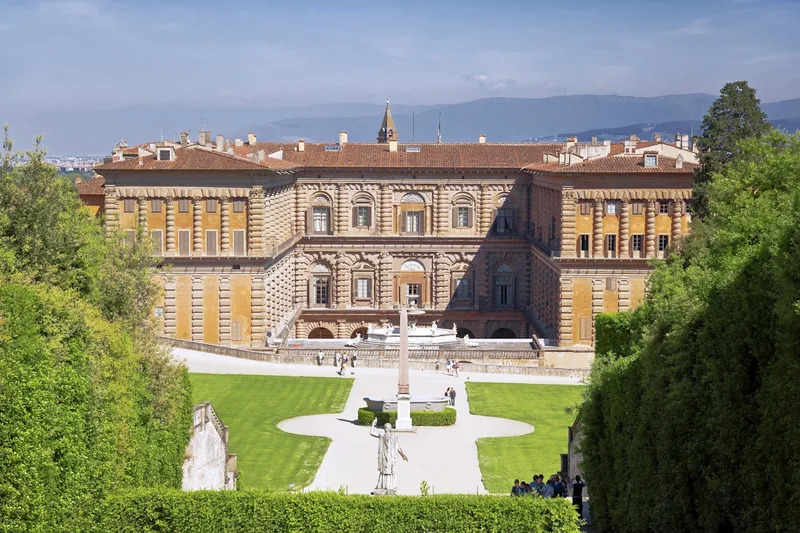 from €30.00
Palazzo Pitti & Boboli Gardens: Reserved Entrance + Florence City Audio Guide
Palace and gardens on one reserved voucher for €30, booking fee inside. Entry is through the Cortile della Dispensa side door, ID is checked, and the gardens shut on the first and last Monday of the month.
Check Availability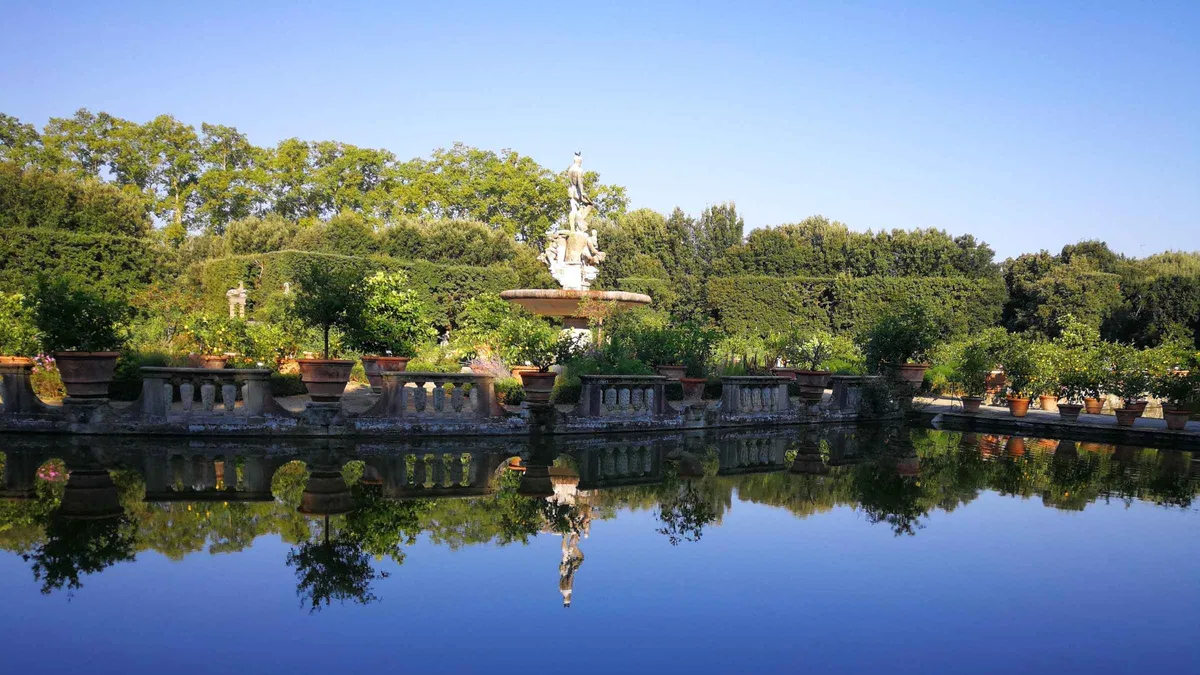 from €85
Top rated
from €85
Top rated
Florence: Pitti Palace, Boboli Garden, Palatine Gallery Tour
listed at $99.90
Three-hour licensed-guide tour of Pitti Palace, the Palatine Gallery and Boboli Gardens with timed tickets; English only, starting at Piazza Pitti.
Check Availability from €68
Florence: Uffizi, Pitti Palace & Boboli Combined 5-Day Pass
listed at $79.23
One timed Uffizi entry that unlocks Pitti Palace and Boboli Gardens over 5 days, with an Uffizi audio app. Combo ticket must be kept; non-refundable.
Check AvailabilityPrices, ratings and details are the platform's own. Dollar figures are the listed prices. The platform bills in your account's currency.
What the Boboli Gardens are: a Medici park nobody else was allowed into
This is not a public park that happens to be old. It was a private garden for one family, closed to everyone outside it, and the design decisions that made it famous were made for an audience of about a dozen people.
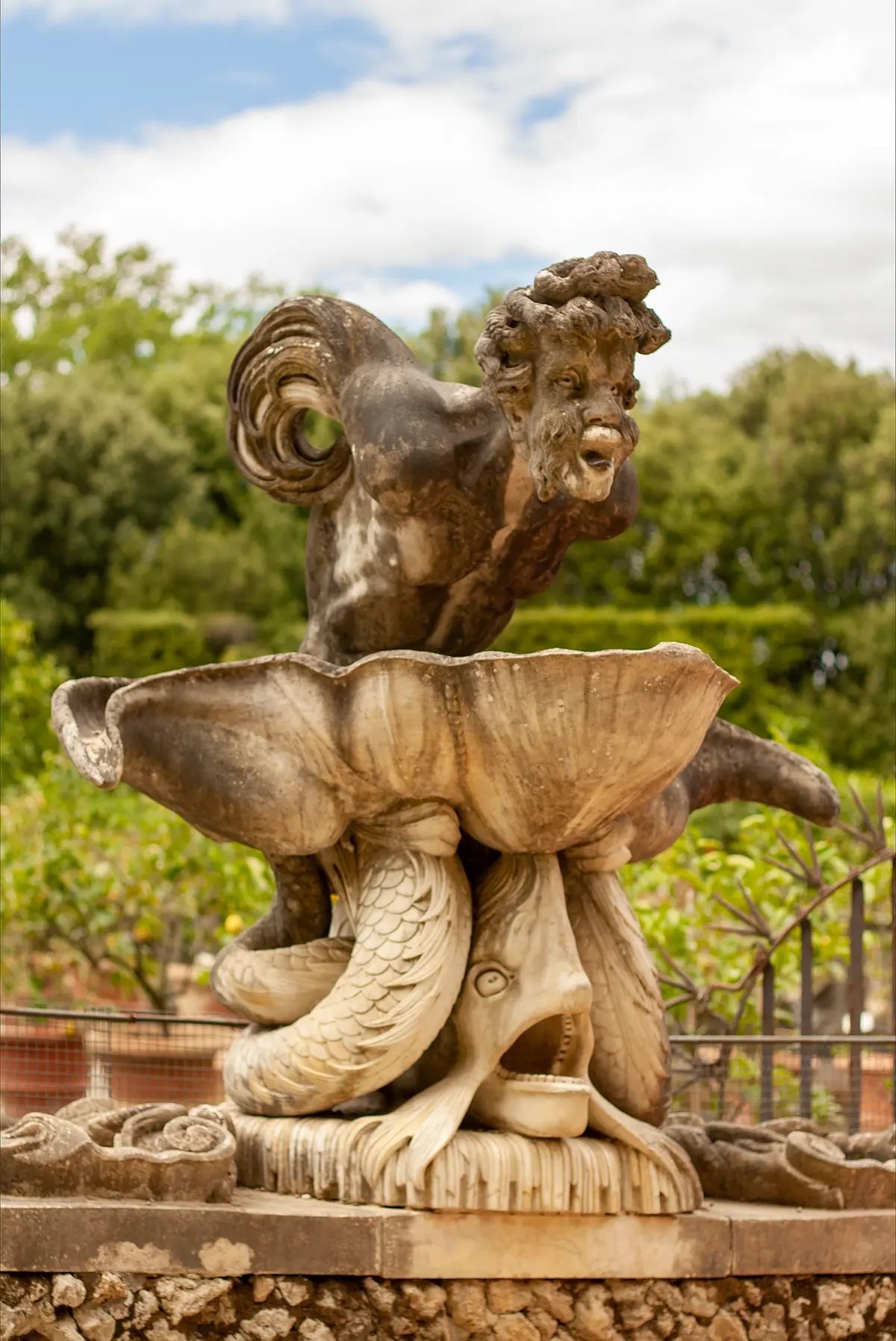
Photo: Macieklew, CC BY-SA 4.0, via Wikimedia Commons (https://creativecommons.org/licenses/by-sa/4.0)
Laid out for Eleonora di Toledo from 1550
The gardens were laid out for Eleonora di Toledo, wife of Cosimo I de' Medici, on the hillside her family's new palace backed onto. Niccolò Tribolo had barely begun the first stage when he died in 1550; Bartolomeo Ammannati continued the work, Giorgio Vasari contributed to the planning, and Bernardo Buontalenti supplied sculpture and the architecture of the great grotto in the courtyard between palace and hill.
No access was allowed to anyone outside the immediate Medici family, and no entertainment or party is known to have taken place here. The openness of the layout, with its long view over the city, was unconventional for the time — most Italian gardens of the 1550s looked inward.
The aqueduct that watered half of Florence
A garden of this size on a hill needed water. Cosimo I funded an aqueduct in the late 1550s bringing water from a spring in the hills nearby, and it did not stop at the garden wall: it crossed the Arno to supply Palazzo Vecchio, by then the ducal residence, and other fountains in the city. A second aqueduct from the Ginevra spring followed in 1565.
That is why there are two Neptune fountains in Florence, one here and one on Piazza della Signoria: both were read at the time as Cosimo's gift of water to the city.
45,000 square metres, and the style Europe copied
Enlarged through the seventeenth century to its present 45,000 square metres — about eleven acres — the gardens became an outdoor museum of garden sculpture holding Roman antiquities alongside sixteenth- and seventeenth-century work. The style worked out here, with long axial avenues, wide gravel walks, a heavy built element of stone, and grottoes, nympheums and garden temples used as punctuation, is the Italian formal garden that aristocratic gardens across Europe went on to imitate.
The Habsburg-Lorraine and Savoy dynasties extended the boundaries along the old city walls as far as Porta Romana, which is why the garden is so much longer than it is wide, and why the far gate is nearly a kilometre from the palace door.
What to see: two axes, one grotto and a view
The layout is two long lines crossing at right angles. Learn those and you cannot get lost: the primary axis climbs straight up behind the palace, the Viottolone runs down and away to the south. Everything worth stopping for hangs off one or the other.
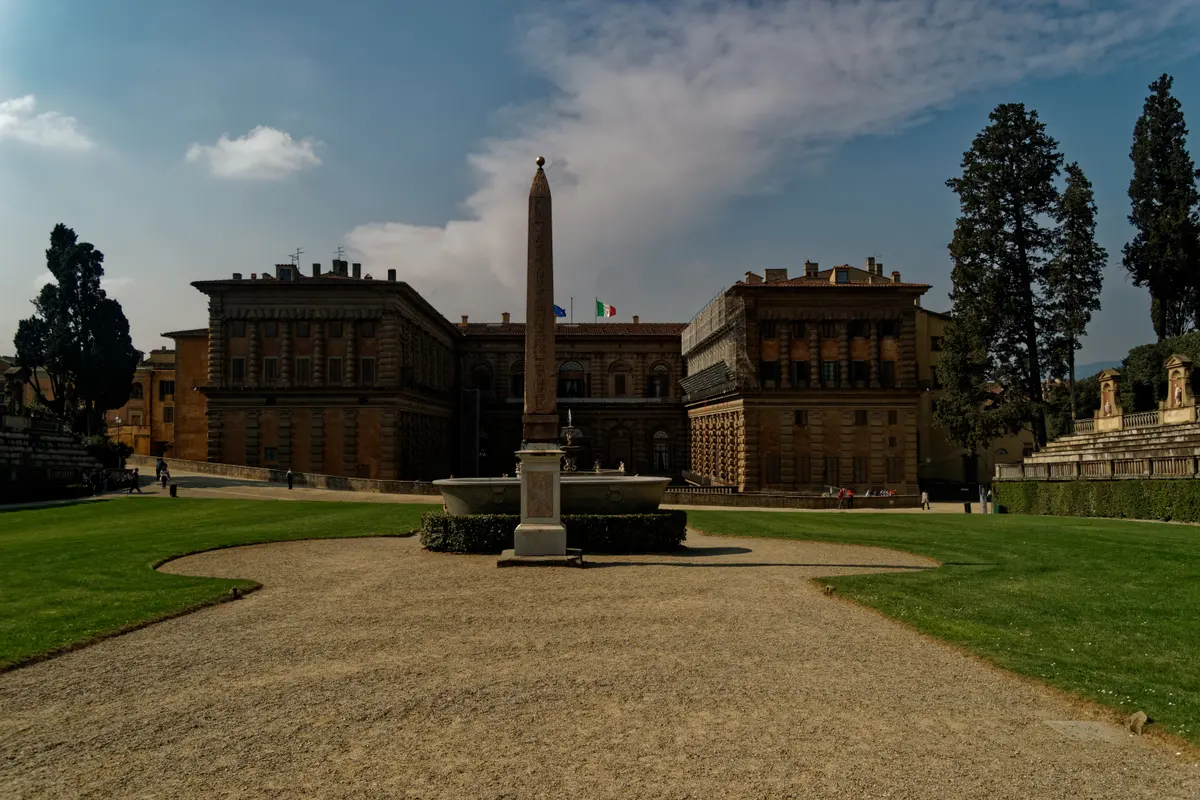
Photo: Txllxt TxllxT, CC BY-SA 4.0, via Wikimedia Commons (https://creativecommons.org/licenses/by-sa/4.0)
The primary axis: amphitheatre, obelisk, Neptune
Directly behind the palace the ground rises into a deep amphitheatre shaped like half a Roman hippodrome, dug into the hillside in the first phase of building and later formalised in stone with statues on Roman themes. At its centre, and rather dwarfed by the space around it, stands the ancient Egyptian Boboli obelisk brought from the Villa Medici in Rome.
Above it a double ramp climbs to the Fountain of Neptune, created by Stoldo Lorenzi between 1565 and 1568 and nicknamed the Fontana del Forcone — the pitchfork fountain — for the trident. The crouching tritons and nereids below Neptune were designed by Tribolo; the rocky base under the bronze was added in the eighteenth century. In the sixteenth century that basin was the reservoir for the aqueduct feeding the city. Keep climbing to the statue of Abundance for the best of the skyline.
Buontalenti's Grotta Grande, and where Michelangelo's Prisoners stood
The Large Grotto and the small Grotto of Madama were begun by Vasari and completed by Ammannati and Buontalenti between 1583 and 1593. Stalactites cover the façade and the interior, which was originally fitted with waterworks and planting; the grotto runs in three chambers.
The first is frescoed to look like a natural cave sheltering shepherds from wild animals, and it originally held Michelangelo's Prisoners, the unfinished figures intended for the tomb of Pope Julius II — those are copies now, the originals having gone to the Accademia. Deeper in are Giambologna's Bathing Venus and an eighteenth-century group of Paris and Helen by Vincenzo de' Rossi. Opening times for the grotto are not printed on the official page; check the notice at the entrance when you arrive, because access has often been restricted to fixed hourly slots.
The Viottolone down to the Isolotto
Giulio Parigi laid out the long secondary axis at right angles to the first: the Viottolone, the cypress avenue, dropping through terraces and water features towards Porta Romana. It is the shadiest walk in the garden and the one most day visitors never reach.
It ends at the Isolotto, an oval island in a tree-enclosed pond laid out by Giulio and Alfonso Parigi around 1618, with Giambologna's Fountain of the Ocean at its centre and statues of Perseus and Andromeda from his school out in the moat. Parigi also built the Grotto of Vulcan along this axis in 1617. From the Isolotto the Porta Romana gate is a few minutes further on, which makes this the natural exit if you are heading for Piazzale Michelangelo afterwards.
Kaffeehaus, Limonaia and the Bacchino
On the terraced ground above the amphitheatre stands the Kaffeehaus, an eighteenth-century pavilion and a rare piece of Rococo architecture in Tuscany, with the view over the rooftops that most people photograph. Nearby is the Lemon House built by Zanobi del Rosso between 1777 and 1778, still where the potted citrus overwinters.
On your way out by the palace, the Fontana del Bacchino is the small, unmistakable one: Cosimo I's court dwarf Morgante astride a turtle. The Porcelain Museum in the upper garden is closed for refurbishment until further notice, per the official notice.
The decision: which hour to spend where
If you have ninety minutes, do the amphitheatre, the Neptune fountain, the Kaffeehaus terrace and come back down — that is the postcard half and it is all within 300 metres of the palace. If you have two and a half hours, add the Viottolone and the Isolotto and walk out at Porta Romana rather than returning to the palace.
What we would not do is try the whole garden in summer heat between noon and four. There is shade on the Viottolone and almost none in the amphitheatre, which is a stone bowl facing the sun.
Gardens with the palace, a guided visit, or a pass
Boboli is sold with Pitti Palace, as a guided visit, or inside a five-day pass with the Uffizi. Here is what each one covers, at the prices the sellers list.
The default answer is the reserved Boboli and Pitti ticket at €30 (about $35), which puts the gardens and the palace on one voucher. The palace and garden ticket with eBook at €35 (about $41) adds the Villa Bardini garden. Booking is not required for the Boboli Gardens, the official page says so, and the gardens do not sell out, so the date you pick is about planning your day.
If the Uffizi is also on your list within the same five days, the five-day Uffizi, Pitti and Boboli pass from €68 (about $79) covers all three and arranges your Uffizi slot.
Who gets in free, and the first Sunday
Under-18s of any nationality enter free with ID, and EU citizens aged 18 to 25 pay a reduced rate. Entry is free for everyone on the first Sunday of each month — and because Boboli is outdoors and large, the free Sunday works far better here than at any indoor museum in the city. Crowds disperse across eleven acres within ten minutes of the gate.
The Firenzecard covers Boboli and lists it as no reservation required. Nothing in the garden is reservable anyway.
What each card adds
The palace and garden ticket with eBook covers the palace museums, the gardens and the Villa Bardini garden, with eBooks sent by WhatsApp or email. It is non-refundable. The Tiqets reserved entry puts the gardens and the palace on one voucher with a downloadable Florence city audio guide.
The three-hour guided tour at €85 is the only listing here with a live guide, starts at Piazza de' Pitti and is the one to book if you want the grotto and the Isolotto explained rather than signposted; it cancels free up to 24 hours ahead. The five-day Uffizi, Pitti and Boboli pass at €68 is for people building a whole Florence museum trip round one Uffizi slot.
Hours by season, and the two Mondays it closes
Boboli is the one major sight in Florence whose closing time moves four times a year, and the mistake visitors make is arriving at 16:00 in January for an hour that no longer exists. Last admission is always one hour before closing, so the figures below are the doors, not the gates.
Opening is 08:15 all year; only the closing time moves. The table sets out all four of them, with the last-admission deadline that comes an hour earlier in every case, as published on uffizi.it. Everything below the table is the part a timetable cannot tell you.
The closed days are the first and last Monday of each month, plus 25 December; there was an extraordinary opening on 1 January 2026. Every other Monday the gardens are open while the palace in front of them and the Uffizi across the river are shut — the single most useful fact on this page for anyone whose Florence Monday looked wasted. The Monday openings page has the rest of the list.
The gardens can also close at short notice for weather emergencies, which in practice means high wind: falling branches over gravel paths are the risk the notice is about. In July and August the useful hours are the first two after opening and the last two before the 19:10 close; the middle of the day on an unshaded hillside is not a visit anyone enjoys.
| Months | Opens | Closes | Last admission |
|---|---|---|---|
| January, February, November, December | 08:15 | 16:30 | 15:30 |
| March and October, standard time | 08:15 | 17:30 | 16:30 |
| March (summer time), April, May, September, October (summer time) | 08:15 | 18:30 | 17:30 |
| June, July, August | 08:15 | 19:10 | 18:10 |
The four gates, and which one to use
Access to the gardens, and exit from them, is possible not only from Pitti Palace and the Annalena entrance in Via Romana but also from the gates of Forte di Belvedere and Porta Romana. Which one you pick decides whether you spend the visit climbing or strolling. The honest recommendation: if you are visiting the gardens alone and the day is warm, walk up to Forte di Belvedere first and enter there.
You arrive at the top of the hill and the entire visit runs downhill to the palace or out at Porta Romana. If you are doing the palace as well, use the Pitti courtyard gate, because the palace and garden entrances are inside the same building. Getting to Piazza de' Pitti: eight to ten minutes on foot from Piazza della Signoria across Ponte Vecchio and up Via Guicciardini, or twenty minutes from Santa Maria Novella station.
From 1 August 2026 an urban bus or tram ticket costs €2 (about $2.30) and lasts 90 minutes. From the Porta Romana gate, Viale Machiavelli climbs east to Piazzale Michelangelo in about twenty minutes, which is the classic way to end the afternoon. On accessibility, the official page is specific: two entrances are usable, one from Piazza de' Pitti on the left side of the courtyard and one from Porta Romana, and the garden is accessible only with an accompanying person.
The ground is clay and gravel and almost entirely sloping, with climbs and descents throughout; the Porcelain Museum is not accessible. Toilets are at the Annalena entrance, near the amphitheatre, at the Porcelain Museum and near the Hair Washer statue. Once you have picked your gate, comparing the guided options among tours in Florence can help you pair the gardens with the palace or the Oltrarno walk nearby.
- Pitti Palace courtyard: the main gate and the ticket office
- Via Romana, Annalena: the quietest gate, five minutes west of the palace
- Forte di Belvedere: enter high, walk down — the knees-friendly route
- Porta Romana: the far southern gate, next to the Isolotto and the walk to Piazzale Michelangelo
Boboli Gardens map: the four gates and what is inside
The gates in terracotta, the things worth walking to in green. Distances inside the garden are longer than the map suggests, because nothing here goes in a straight line for long.
Next stop from the Boboli Gardens
Walk times are our estimates from the GPS distances, and they assume you leave by the gate nearest the destination — which is the whole trick with this garden.
Pitti Palace
Same courtyard, and on the same palace and gardens ticket. The Pitti Palace guide covers the Palatine Gallery and which ticket suits your day.
1 min walkPiazzale Michelangelo
Leave by Porta Romana and climb Viale Machiavelli. Free, no gate, no closing time — the Piazzale Michelangelo guide has the bus if the hill is too much after a garden.
20 min walkOltrarno and Santo Spirito
Out at Annalena and north: workshops, Piazza Santo Spirito and the Brancacci Chapel with its 30-minute visit limit. The Oltrarno guide has the district.
5 min walkBoboli Gardens questions
Can you visit the Boboli Gardens for free?
Only if you are under 18, or on the first Sunday of the month, when entry is free for everybody with no reservation. Otherwise the reserved Boboli and Pitti ticket is €30 (about $35), and EU citizens aged 18 to 25 pay a reduced rate. The combined ticket with eBook adds Villa Bardini.
Does the Uffizi ticket include the Boboli Gardens?
No. The Uffizi ticket covers the Uffizi. The five-day Uffizi, Pitti and Boboli pass from €68 (about $79) covers all three, and the Uffizi tickets page sets out the Uffizi options.
How long does it take to walk through the Boboli Gardens?
The museum does not state a visit length. Our routing: 1 hour 30 for the amphitheatre, the Neptune fountain, the grotto and the Kaffeehaus terrace, and 2 hours 30 if you add the Viottolone down to the Isolotto and walk out at Porta Romana. The guided palace and gardens tour allows three hours for both halves together.
Are the Boboli Gardens open on Monday?
Yes, except the first and last Monday of each month. That is unusual in Florence, where most state museums close every Monday, so a Boboli morning is the standard fix for a Monday arrival — see the Monday openings page for the rest, and note that Pitti Palace itself is shut.
Which Boboli entrance should I use?
Forte di Belvedere if you want to walk downhill all visit, Porta Romana if you are heading on to Piazzale Michelangelo, Via Romana at Annalena if you want the quietest gate, and the Pitti courtyard if you are also doing the palace — that is where the ticket office is. The Pitti Palace guide covers the courtyard entrance in detail.
Is the Buontalenti Grotto open to visit?
The Grotta Grande is part of the gardens and needs no separate ticket, but the official page does not publish its opening times and access has often been limited to fixed slots on the hour. Check the notice at the grotto door on the day. Inside are copies of Michelangelo's Prisoners, Giambologna's Bathing Venus and de' Rossi's Paris and Helen — the three-hour guided tour is the reliable way to have it explained.
Are the Boboli Gardens worth it?
For €30 (about $35) on the reserved Boboli and Pitti ticket you get eleven acres of Medici landscape, the Grotta Grande, a Roman-style amphitheatre with an Egyptian obelisk in it and the Kaffeehaus view over the rooftops, with the Palatine Gallery on the same voucher. It is the only major sight in the centre where you are outdoors.
Is the Bardini Garden included in the Boboli ticket?
Not in a garden-only ticket. The combined palace and garden card does include Villa Bardini, which is the simplest way to get both on one order.
Where Boboli fits in a Florence day
The sequence we would run: Pitti Palace at opening, out into the gardens by 11:00, up the amphitheatre and along the Viottolone through the middle of the day when the museums across the river are at their worst, out at Porta Romana in the late afternoon and up to Piazzale Michelangelo for the light. That uses the one big sight in Florence (see Florence sightseeing) that improves as the crowds thicken elsewhere.
On a short trip the gardens are the flexible piece: they need no booking, they are open on most Mondays, and ninety minutes in them is a complete visit. The three-day itinerary puts them on the Oltrarno afternoon; the museums page compares every ticketed sight by price and time needed, and the full attractions list covers what is left.
Everything else on this site branches off the Florence attractions hub, including the ticket hubs and the neighbourhood pages.
The gardens on video
Three walk-throughs covering the amphitheatre, the Viottolone and the grotto, so you can judge the distances before you buy. Video ids come from our own verified list.
Florence's Palazzo Pitti & Boboli Gardens | Guided Tour
A guided run through the palace and the gardens in sequence — the same order as the combined ticket takes you.
Video: Academy TravelInside Florence's Boboli Gardens: Walking Tour & History Guide
A full walk from the amphitheatre down the cypress avenue, which is the best way to see how long the Viottolone really is.
Video: The Four Chains TravelFlorence in a Day: Boboli, Bardini & Sunset at Piazzale Michelangelo
The Porta Romana exit and the climb to Piazzale Michelangelo, filmed as one afternoon — the routing this page recommends.
Video: Expat Lifestyle with BaddsPrices, hours and terms are set by the venue or operator and confirmed at checkout.
We may earn a commission if you book through one of our links, at no extra cost to you. Full affiliate disclosure